


 Apple Podcasts
 Spotify
 Castro
 RSS Feed
 What Teens Are Trying to Tell Us: The Crisis of Connection and Masculinity
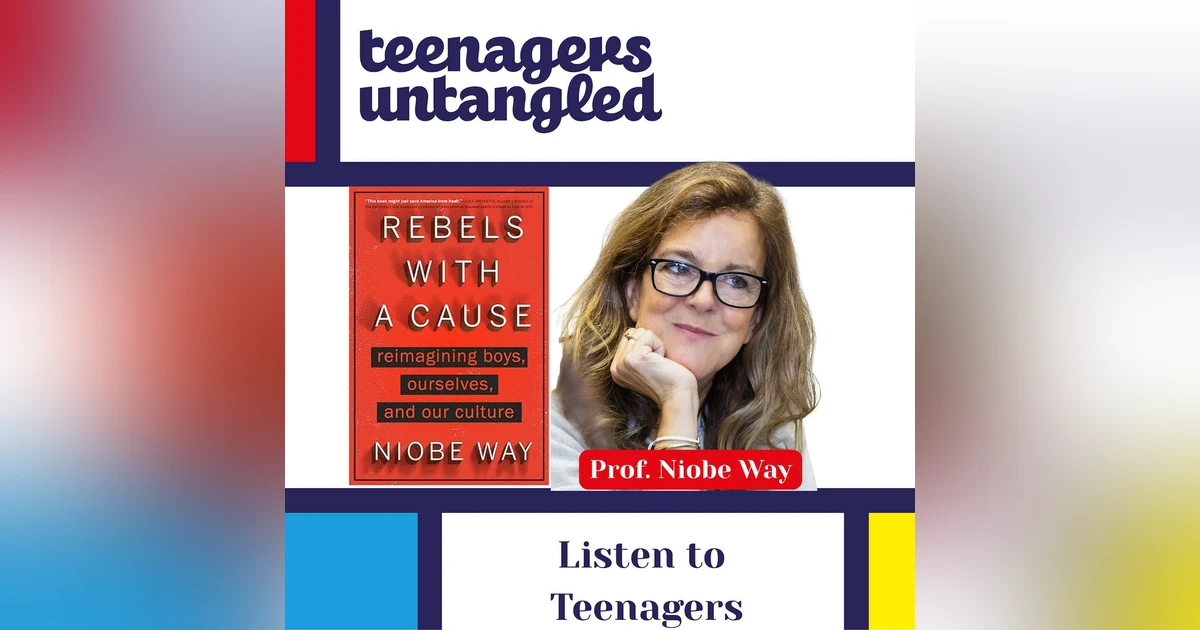

Ask Rachel anything What are we really telling boys about how to be a man? And why do so many teens seem to be struggling with how to be in the world, from masculinity to friendship, and mental health? In this conversation with Professor Niobe Way (NYU developmental psychologist, author of Deep Secrets and Rebels with a Cause), we dug into 40 years of research with adolescents. Her work is extraordinary because she has done something deceptively simple and radically powerful: She listened to ...
What are we really telling boys about how to be a man? And why do so many teens seem to be struggling with how to be in the world, from masculinity to friendship, and mental health?
In this conversation with Professor Niobe Way (NYU developmental psychologist, author of Deep Secrets and Rebels with a Cause), we dug into 40 years of research with adolescents. Her work is extraordinary because she has done something deceptively simple and radically powerful:
She listened to teenagers carefully, over time, and took what they said seriously.
What emerges is a completely different story about boys, friendship, and mental health than the one most of us have absorbed from culture, headlines, and even psychology textbooks.
Prof Niobe Way: LinkedIn
My early episode in which I referenced Niobe's work
Please hit the follow button if you like the podcast, and share it with anyone who might benefit.
You can review us on Apple podcasts by going to the show page, scrolling down to the bottom where you can click on a star then you can leave your message.
Please don't hesitate to seek the advice of a specialist if you're not coping. There's no shame in reaching out for support. When you look after yourself your entire family benefits.
Find all the tips from the episdoe on Substack:
My email teenagersuntangled@gmail.com
My website has a blog, searchable episodes, and ways to contact me
00:51 - Why Niobe Listens to Teens: Longitudinal Research Explained
01:27 - The Mismatch: What Textbooks Say vs. What Teens Say
04:30 - Deep Secret Friendships: Boys’ Desire for Vulnerability Boys’ recurring wish for close friends they can confide in without being shamed; evidence of boys’ emotional intelligence.
08:10 - Social Health vs. Mental Health: Kids’ Own Diagnosis Niobe: mental health symptoms often reflect a social health problem; the importance of “how you’re treated” in predicting wellbeing.
12:00 - Crisis of Connection in Adolescence How boys go “underground” emotionally in mid‑adolescence and the emerging crisis of connection for both genders.
15:44 - Cultural Ideologies: Hard vs. Soft Values How modern culture privileges autonomy, stoicism, and “hard” values over connection and sensitivity—impact on masculinity.
18:07 - Hard/Soft Integration: Why Both Sides Matter Concrete examples showing how autonomy and connection coexist and why integration is essential for healthy relationships.
21:18 - Gender Differences: Boys’ vs. Girls’ Crisis of Connection How boys tend to disconnect from others while girls disconnect from the self, and why both outcomes are harmful.
23:43 - Parenting Priority: Teach Kids to Have Healthy Relationships Niobe’s claim that the single most important task of parenting is helping children form, sustain, and repair relationships.
27:12 - Curiosity as the Secret Sauce: Interpersonal Curiosity Defined Introduction to interpersonal curiosity vs. intellectual curiosity and why curiosity builds connection.
30:56 - Listening With Curiosity Project: Training Kids to Ask Thick Questions Overview of Niobe’s Listening with Curiosity method, curriculum, and the Social Health Institute training work.
34:24 - Examples of Thick Questions That Transform Conversations Powerful sample questions kids asked Niobe (e.g., “Where do you feel safe?”) and why thick questions break stereotypes.
37:58 - How to Use Curiosity with Teens: Practical Parenting Tips Concrete suggestions for parents: ask about online follows, follow up with “why,” model repair, set boundaries with warmth.
41:30 - Social Health in Policy and Culture: Bigger Picture Discussion of Vivek Murthy, loneliness vs. social health, and state-level interest in social health as public policy.
44:23 - Stories from Classrooms: What Kids Really Say Anecdotes showing kids’ truth‑telling and the surprising insight children bring when adults listen with curiosity.
47:28 - Final Takeaways: Nurture Both Hard and Soft, Ask Thick Questions Key wrap: value emotional sensitivity, model repair, make curiosity a habit, and prioritize social health.
What are we and the society we live in telling boys about how to be a man, and why do so many seem to be struggling with masculinity? Well, today's guest has been asking adolescents what they really think for 40 years, and she has some answers for us. You're listening to Teenagers Untangled, the audio hub for parents going through the teen and tween years, where we combine research by experts and practical tips to make modern parenting much easier. I'm Rachel Richards, journalist, mother of two teenagers and two bonus daughters. And my guest to help us explore today's topic is Nayibie Wei, a developmental psychologist and professor at New York University. Her research is so valuable because she actually listened to boys over time rather than assuming what masculinity looks like, she wrote the groundbreaking book Deep Secrets that inspired the Academy Award-nominated film Close, and more recently the book Rebels with a Cause. Welcome to the podcast.
Niobe Way:Thank you, Rachel. I'm so pleased to be here. This is, this is my kind of podcast. This is,
Rachel Richards:this is my kind of person. Yeah,
Unknown:I'm so excited to be here. Okay, how should we get started? Go ahead.
Rachel Richards:Well, I want to say first that I am such a fan. I'm thrilled that you've taken the time to be with us today. I originally discovered your work when I researched one of my earliest episodes for this podcast, which was about boy friendships. I'm going to put the link in the notes so that people can see some of that, but for the people who don't know you, should we just go back and start with deep secrets, because I think this kind of, there's been a whole narrative, hasn't there?
Unknown:Yeah,
Rachel Richards:what did you reveal in that book that struck such a chord?
Unknown:Okay, so first of all, I want to go back a little further from when I started becoming interested in boys' friendships, because this goes back to all the way back to 1988 I was a doctoral student at Harvard University, I was in a PhD program called Human Development and Psychology, so that's a whole field, and oftentimes called Developmental Psychology. And I was working in high schools, and I was listening to young people. This was just, I was interested in social emotional development, and I was just listening to young people. And what was most striking, this is 1988 because I'm still hearing the same themes, Rachel, 40 years later, when boys would talk about their friendships, they talk about struggles and friendships, wanting to have close friendships, being betrayed by guys, and all the pain that came from that. And I was blown away. I was blown away, Rachel, because first of all, it totally had nothing to do with what I was reading in my textbook about adolescence in graduate school. I was reading about high-risk behavior, and about teenage pregnancy, and I was reading all these things about teenagers that had nothing to do with what teenagers, especially teenage boys, were talking about. So I became fascinated by why the mismatch between the stories we tell about teenagers and actually what teenagers say. And Rachel, I'm just saying that is still the case. This could sound like an exaggeration. It's not an exaggeration. It has nothing to do what teenagers really care about, and what they're all about, and what they need to thrive. It has nothing to do with it, what the stories we tell. So, I became fascinated by the mismatch, but I also became fascinated by when people would talk about boys. When I would say, you know, I started at NYU in 1995 as a professor, and I started to do federally funded research longitudinally, which is great. So, I'm thank you for doing that in my introduction. I'll explain to your audience what longitudinal means. It means I follow the same kids over time, so hundreds and hundreds of kids, we follow the same kids over time, and had we not done that as a research method, it's common in developmental psychology, I wouldn't have heard the themes that I'm about to tell you are the four themes that you hear in Deep Secrets, because it's about the shift that happens from early adolescence, which is about 1112, 1314, to late adolescence, which is about 1617, 18, and you hear it because it's the same kids every year, hundreds of kids, the same kids every year being asked the same questions, and then Rachel, that's the genius of my work. I just have to say, because nobody else has that data, nobody has that data, so that you actually have the same kid give very different stories at 13 and then 16, totally different stories when you ask them about friendships. Okay, now let's get to the findings. Basically, I'm summarizing, obviously, 1000s of kids, you know, it's 40 years, so it's a lot, but there's four major themes that are talked about in Deep Secrets, and then in Rebels, my new book, I talk about how those four themes are relevant, actually to all of us, not just to boys and young men. Okay, so the first theme is that deep desire for what boys call deep secret friendships, and by that they mean friendships in which they can share their feelings, be vulnerable with, and not be laughed at. We're not talking about necessarily deep dive into the meaning of their relationship with their mother, right? When they say deep secrets, but being able to talk about, for example, their parents' divorce with someone, that's a very common topic. They want to be able to talk about the fighting that's going on with their parents, and they don't want to talk to an adult about it. They want to talk to a male peer about it, and not someone not dismiss it as like they're overreacting, or they're being too, you know, girly in their feelings about the pain that caught that parents oftentimes cause their children. So they want deep secret friendships to be able to talk about things, but this is the second part of that first finding, which is so important to me. They reveal in these. In their narratives, when you hear their language that they use, and Rachel, you saw this because you've read Deep Secrets. The language that they use, it's so emotionally and relationally intelligent. They talk about how they cover over their feelings, but they really feel angry, but they, they really feel hurt, but they cover it over with anger. They talk about incredibly sophisticated ways about what goes on in their friendships, particularly in early and middle adolescence. They are incredibly relationally and emotionally intelligent, and you hear that in their language. Okay, so not only in the first theme do they want friendships, deep secret friendships, but they have the capacity to have them. Okay, second theme - this is a very powerful one. This is still early to middle adolescence, right? These are the themes that we heard in 12, 1314, year olds, approximately. Second theme is they very clearly identify that mental health is not the problem, it's a symptom of a social health problem. It's not the problem, it's not the problem, it is literally a symptom of the of a social health problem, and they've told me that since 1988 and that is something, Rachel. We are still not listening to. We still think mental health is the problem. It is not the problem. It is what comes from being naturally social, right now. We're social animals. We know that from social neuroscience, too, Rachel. You know that we're social animals. We grow up in an anti-social culture, a me, me, me culture. It's all about me. We don't value relationships, we value autonomy over relationships, thinking over feeling. I mean, we're intensely antisocial in our values. So, if you grow up in a culture like that, what's going to happen is that our social health, like Vivek Murthy says, the former Surgeon General suffers, and how I know that we are an antisocial culture is we don't even have the concept of social health in our public health discussions. We have mental health and physical health. Social health doesn't even exist. Okay, doesn't even exist as a construct yet. When you ask fifth grades, this was a couple weeks ago. I asked a group of 120/5 and sixth grade boys, and so for a European audience that's 1011, year old. I asked them basically before I began giving my findings. I always do this. I asked them the main research question, and so I said to a whole group of 10 and 11 year olds, what's the predictor of mental health? I just, you threw it out there in the beginning of how interesting. And a fifth grade boy raised his hand, he said, How you're treated by others. And then I said, I started laughing, because I, you know, why I started laughing. I said, I have spent a career making millions of dollars to make that insight. And then, and then all the kids totally started to laugh. And then they said, but it's so obvious, you know, the way you get treated by your friends makes you feel bad about yourself. Rachel, what I'm trying to say is they say what you know the boy said in my research interviews, but all you got to do is ask a group of 150 10 year olds and they say the same thing. And what's incredible to me, Rachel, and I'll get to the third theme in a second, I'll get, I'll go, I'll walk through it, but the second theme, what's incredible is that the adults are fundamentally not listening. It's a duh to them. I mean, I know does from my generation, not theirs, but it is a duh. It is a duh insight for them, and they couldn't.
Rachel Richards:And just to say that these are kids across the spectrum, you are covering. You are not just in one particular type of school.
Unknown:No, no, no. These are first, but by now we do, by the way, studies in China. We do studies all around the world. It's in, you know, all sorts of kids, rich kids, poor kids, middle-class kids, white kids, black kids, Asian kids, Chinese American kids. I don't care what demographic you're talking about. I've interviewed them, and so, and quite frankly, you know, kids who don't identify as gender binary. So, I mean, across the board, young people know, right? They know. I mean, we knew this, Rachel. We knew this when we were younger. Yeah, the way you're treated by others affects how you feel about yourself, and the fact that in a culture that we don't even acknowledge that underscores our anti-social quality. Okay, so now I'm gonna get to the third thing. The third theme is what a lot of I've been interviewed a lot about, and I've written a lot about, and David Brooks has quoted me from the New York Times many, many times on this. Remember, it's the same boys over time as you hear their narratives go from when they're 13 and they talk about their desire for deep, deep secrets, deep secret friendships, 14, and then by 1516, you start to hear them, what I say go underground with what they feel, so they start to say they start to sound like stereotypic boys, meaning it doesn't matter, it's okay, but they also start to say things about how sad they are, how frustrated they are, and sometimes how angry they are, that they can't find the friendships that they're looking for, and I called that a crisis of connection, that boys are experiencing a crisis of connection during adolescence, and then what it turns out that actually, when you look at the data on girls, by the way, just for your parents, girls also experience a crisis of connection, and I can, I can answer the question, how their crisis looks different if we get there, but just so you know, there is a crisis of connection for both, for both genders, but it looks different. Okay, so the crisis of. Connection for boys is a disconnection from others to sort of in the name of manhood, but also this is the fourth theme: cultural ideologies. By cultural, I mean modern culture. I don't mean American, I don't mean English or British, whatever. I mean modern culture. Modern culture that basically defines.. now I'm gonna.. I want you, your listeners to hear this, because it's so important. We define manhood, maturity, success, and modernity exactly the same way. It's about being self-sufficient, autonomous, right, stoic. We define it the exact same way, right. And what I say in my new book, Rebels with a Cause, it's evidence that we privilege the stereotypically masculine. It's not masculine, it's just human, right? Over the stereotypically feminine, and if I'm going to put it bluntly, we give gender identities to thinking and feeling, and that's where we go wrong, because ultimately, what boys teach us, right, is that we think and feel. I mean, we're all, you know, we all, we want autonomy, and we want connection, we want, right, we want, we are able to be stoic, and we're able to be vulnerable, and we oftentimes are both at the same time, and so the idea is that the problem is the fourth theme is cultural ideologies, hierarchies, and stereotypes. I write that in my new book for Harvard, called Our Social Nature in an Anti-Social Culture, a five-part story, the antisocial culture in my rebels. It's actually, I call it boy culture, because boy, in quotations, mean it's a cartoon character of a boy that only has a hard side, and that's our whole modern culture defining maturity, manhood, success, and modernity the exact same way, which is basically manning up for everybody, and so, when we live in a culture that only values our hard side and doesn't value our soft sides, it causes hell for us, because we are naturally soft and hard. We are naturally social animals, and we're also cognitive animals, right? I mean, we are, we are a mixture of, in Chinese philosophy, it's the yin and the yang, right. We're naturally the yin and the yang in terms of who we are, and, and Chinese philosophy gets that, by the way, because it's all about the integration of the yin and the yang, and not separating it out. So, anyway, so the, so the point is, so the four themes, the fourth theme responds to the question of the third thing, which is the crisis of connection. Why is there a crisis of connection? And it is growing up, and the answer is, according to the data, it is growing up in a culture that clashes with our nature, and that leads to basically a crisis of connection, it leads to depression, anxiety, loneliness, suicide, and in the most severe cases, obviously suicide, but also violence, you know, committed mass shootings, you hear this in the mass shooters net manifests the same themes, they are angry, they are angry at that. We are in a society that doesn't care about them, but also doesn't care about each other. They talk about a mass shooter, said in one of his manifestos before the night before he, he stabbed his roommate 96 times. He said,"This is against all you humanity who's let me rot in my own loneliness. So the point is, is he didn't blame his loneliness, he blamed all humanity, which means the culture, right? He didn't blame his mother, he didn't blame his peers, he said, "All you humanity, that's let me rot. So he gets it, and a lot of the mass shooters get that, that it's a cultural problem, it's the waters in which we swim that leads us away from what we need, who we are, and then guess us to hate each other, right? And guesses to neglect each other and not care about each other. So that is the sort of the four themes that boys teach us, and they also teach us, which is not a theme, but I want to end on it, so it doesn't sound so depressing, because it's actually not depressing. No, no, it really, I'll tell you why, because they, they teach us the solutions. The solutions is going back to the first part of the story, our social nature. We already have the skills within us to solve our own problems. They're five year old skills, and if I ever did a podcast, my podcast would call be called How to Act Like a Five Year Old, because ultimately,
Rachel Richards:yes,
Unknown:because five year olds look at each other and look at us with wonder, and they want to learn, they want to know why, they want to know why you do this, why it's actually learning from each other, and so the idea of curiosity, interpersonal curiosity, which I want you to ask me questions about that, because that's the secret sauce that boys and young men have taught us creates connection, and now we're seeing it in our survey research across NYU students, and we're now doing a lot of research on young adults, and we see the same theme, interpersonal curiosity, which we don't even value, Rachel, because it's a fet, we see it as a feminine skill, so we don't even value, we don't even study it in my field, we study intellectual curiosity, but not the soft version, which is interpersonal curiosity, and think, Rachel, I'm going to end with, imagine living in a culture as social animals that we don't value our natural curiosity in each other, we don't value that, and we don't nurture it, right, and we think connection, we think connection, we're so disconnected, we think connection is just talking about ourselves to somebody else. It right, being vulnerable with someone, you look at leadership training programs, you look at SEL programs. I tell you, they all give the same message. It's all about you talk, you talking about, you know, about yourself and sharing and being emotionally sensitive, right? Nothing about actually being interested in the thoughts and feelings and experiences of another person isn't that incredible, and that's how fundamentally anti-social we are.
Rachel Richards:I use the word curiosity all the time on this podcast as, as something that we need to develop because of exactly the sorts of things we're talking about. I want to come on to that just before we move. I want to, a couple of things I want to ask about, is it just a weird culture thing? Is it just the Western, because you're crossing different cultures. No, no, it's the cultures getting this right.
Unknown:Yeah, yeah, no, no, no. And this is why, because in this globalized world, I hate to say it to a British person who say it, American ideology dominates the world. It dominates the world, right? I mean, so whether you like it or not, I've been living in, I've lived in China. I've been doing a study of 1200 families in China for 20 years. My dad was a China scholar. The fact of the matter is, you see, the introduction of an American version of masculinity, you know, the hard over the soft, the masculine is playing sports. It's, you know, not.. it's not thinking, it's just being good at sports and being fit, I mean, and you see the homophobia of American masculinity, something that was never that so gay, which is a very American phrase. You are seeing it. My ex-husband is from Berlin, you are seeing it in Germany, you're seeing it around the world. That's so gay has entered into the conversation since about the 80s and 90s, because that is literally the American version of masculinity, which is, I'm going to define that, what I mean by masculinity, it's an a masculinity that doesn't value our stereotypically femininity, and most cultures around the world, most traditional cultures, you can say, you know, they're more sexist or they're not more sexist, or whatever you want to say, but most cultures around the world actually have a history of valuing the stereotypically masculine and the stereotypically feminine, and that's true in China, that's true in all sorts of countries in Africa, all sorts of countries in Europe, that there's a whole history of valuing our hard and soft sides. The United States doesn't have that history. We've never valued truly, we've never valued truly our soft sides. I'm not saying we've never valued poetry and the arts, etc. We obviously have, but we've more valued it in terms of, you know, the bourgeois elite, you know, who has their cultural institutions, and we value that. We don't value fundamentally our sensitivity. You know how we can prove it. Also, our SEL programs, which is in 90% of our schools in the United States, it's social emotional learning programs. They emphasize emotional regulation, which is regulating your emotion. That's a hard skill. They don't ever include emotional sensitivity. And think about how
Rachel Richards:interesting
Unknown:and how equally important nurturing your natural emotional sensitivity is to other people's feelings, right?
Rachel Richards:That's the first time I've heard that.
Unknown:I know, I know, I'm just saying, nobody's talking about this, and the reason I was
Rachel Richards:talking about it,
Unknown:and the reason I'm talking about it is because boys, are you kidding me? Talk about, talk about a group of kids that are emotionally sensitive. I mean, Carol Gilligan, who's done a lot of work with girls and women, she even said when she read Deep Secret, she's written for 50 years on girls and young women, she said when she read Deep Secret, she said it's such a boys book, and I said, "Why? She said, "Because their emotions are so raw. She said, "Girls cover over all the time, they cover over, they fake it, they fake it. So, in some sense, the soft, the sensitivity of ourselves, I have learned from listening to boys and young men the importance of the emotional sensitivity. My goodness, they're looking for that in their friendships, they are rich. I'm gonna repeat that. Okay, they're looking for that in their friendships, the emotional sensitivity, and we don't even see it as a thing, because we feminize that skill, and we think it's only necessary for girls. And, in fact, we accuse girls of being overly sensitive constantly. 90% of the girls, young women I work with, say they've been accused that their whole life, and I will say, and they'll start getting tears in their eyes. I'll say, your emotional sensitivity is your superpower, and don't ever lose it. And they can't believe I'm saying that, right? That actually lean into your emotional sensitivity, because that is your, your human superpower, right? Is to be able to feel the feelings of other people, but also feel your own feelings, right? Feel your own
Rachel Richards:feeling, and you talk, you talked about how, when boys are sort of first entering your kind of investigations, they talk about their relationships, and it sounds more like something out of love story.
Unknown:I mean, but that was, that's the most shocking. I mean, you see that in the movie Close, that you know is based on deep secrets. What's amazing in Lucas Dawn's films. Home, and it won by the, it was not nominated or won something like 120 awards around the world. It clearly hit a nerve. Deep Secrets clearly hit a nerve around the world. He takes the finding from Deep Secrets, and then he makes it into a fictional story about 213 year old boys. But what he captures in that, which was so moving to me, I mean, I literally, you could imagine, Rachel, I cried when I watched the movie, is he, is he captured the emotional intensity between boys, the emotional expectations, the disappointment when the other boy doesn't come through, and the emotional intensity of that's not that girls don't do that, obviously they're just as sensitive as boys, there's not a gender differences in emotional sensitivity, but I'm just saying, in some sense, this is going to now. This is an interpretation. This is not actually directly from the data. This interpretation, there's a way it makes me think that because boys aren't nurtured to be emotionally sensitive, certainly more like girls are, that they actually, in some ways, they're more honest with their feelings, because it's just how they feel, girls learn, you know, girls get nurtured to be emotionally sensitive to somebody else's feelings, and then they learn how to fake it when they, when they actually don't feel sensitive to someone's feelings, because they're hurting their feelings. So, in some sense, I think we nurture boys going underground, but I think we also nurture girls faking it, you know, like
Rachel Richards:that's what you mean by the disconnection that girls experience.
Unknown:Yeah, well, this is this is the disconnection. I'll quickly summarize it, because it's gonna get off us on another topic, but I'll quickly say it. Boys' crisis of connection is centered around disconnecting from others. Girls' crisis of connection is centered around disconnection from the self. So, girls will say in the data as they enter adolescence, they will start to say I don't know, right? They knew if you ask them questions at eight, nine, and 10, they'll just give you a direct answer. They're truth tellers. By the time they're 12 and 13, they'll do that weird thing where they'll say I don't know, and then they'll say something, you know, they, I don't know, I don't know, meaning they're going underground with what they know, right? And they silence themselves in relationships. And I've been teaching this, the girls work for 30 years, and I have women around the world weep every time they read Carol Gilligan's work on this on the girls, because they all resonate with it. The taking yourself out of relationship for the sake of relationship, right? And boys take the other out of relationship for the sake of the self. You get, you got to follow what I'm doing. Yeah, so the crisis of connection for boys is sacrificing the other for the sake of the self, and for girls it's sacrificing the self for the sake of the other, but the point is, the point is, you can't have a relationship if either one is sacrificed, there's no relationship if either one is sacrificed, so the solution is to not sacrifice either side in a meaningful, beautiful connection, and that's what boys are asking for in my data, and girls are asking for in the girls and women, young women's data. And so this, this idea that in a culture that doesn't, you know, doesn't even value friendships, doesn't even value relationships, we don't have these conversations, we don't have, we don't have these conversations about emotional sensitivity is your human superpower, and we wouldn't survive as a species, according to Charles Darwin, by the way, if we didn't have this emotional sensitivity. Do you know he does studies of his children? He wrote a journal about his children, and he notes in this journal - I have it in the Rebels book - I quote him a lot, actually, from his journal. He talks about the sensitivity of his sons and his daughters, and he's struck by it. He's struck by it, how emotionally sensitive they are. And then I'm also finding it. I sat in a four year old classroom for a year, and you just see the four year old, the five year old, the capacity to care and cooperate and be curious with each other. It's remarkable how social we are in the first years, and then we lose it because we grow up in a culture that clashes with our nature,
Rachel Richards:and that's what's so wonderful about your books. You have so many stories that you can draw from that bring everything to life.
Unknown:Yeah,
Rachel Richards:I want to talk about curiosity. I also want to talk about there's a few other things I'd really like to talk
Unknown:about. Yeah, absolutely.
Rachel Richards:Sue, and you talk about hard and soft values. What do you mean by hard and soft, soft values in a way that listeners can understand?
Unknown:I should frame it as stereotypically hard, because obviously you know math skills is not actually harder than writing a complete essay, right? But we stereotype it as stereotypically hard. So, by hard, I just literally mean cognition, thinking, math, and science, those are hard professions, so-called hard professions, you know, autonomy, stoicism, all the things that we associate with stereotypic masculinity, the soft skills, the soft values, the soft professions, nursing, teaching, right, I mean, all the things that involve caring, the feelings, relationships, connection, me, I mean, like everything we've stereotyped as feminine, as girly, girly, or gay, as the boys say in my data, is deemed lesser than, or not important, or actually getting in the way of the hard stuff. So to me, it's the problem I'm going to say. Something that you're going to be surprised by, Rachel, but it really is coming from the boys. The problem is not masculinity. The problem is a culture that values only one side of ourselves and not the other. And when we write, when we are naturally hard and soft. So, I'll give an example. I'm going to give a concrete example for your listeners. Let's say, imagine Rachel, you're telling me about a very difficult experience, and you're crying, you're starting to cry, and I'm trying to be, I'm your friend, and I'm trying to be empathic, and I feel like crying, right, but I'm not going to cry, and that's my stoicism. In my name of sensitivity to your feelings, I'm actually going to be stoic, because if I start to cry, you are then going to feel like you have to care for me, and so I know that if I start crying, I need to actually just focus on why you feel sad and supporting you, not to start crying and then make it based on me. That's an example of where you're using your stoicism and your sensitivity at the exact same time, and I could give a million examples of where we're looking in relationships, we're looking for autonomy, and we're looking for connection at the very same time. We want to say our views, right, our open views, that's autonomy. Girls saying what they feel, and boys, right, want to say what they feel too, and what they think and know. And at the same time, they want the connection, and in the best well-connected relationships, I'm going to give now relational advice to the parents. It always entails autonomy and connection. It always entails autonomy and connection in a relationship to be a healthy relationship. When I value Rachel, what you truly think about something that's valuing your autonomy, and I do it in the name of wanting to connect to you, right? So the whole.. so it's the whole splitting of this so-called hard and soft, which is not hard and soft, it's just human needs, human needs of capacities that we deemed hard and soft because we think in a very gender binary way, and then we're given these gender identities that's really hurting everybody, it's hurting everybody, yes,
Rachel Richards:and one of the things we talk about a lot on this podcast is about the importance of allowing some autonomy with your kids rather than trying to control them, and that trust does involve them being more connected to you rather than less, and I think a lot of people find that very stressful.
Unknown:Okay, Rachel, let's repeat that, because that is the one thing parents are not hearing, is that ultimately when you set boundaries, when you set limitations, as well as when you intervene and say things like that's gaslighting to your child to help them understand what's happening at school by somebody else that is actually nurturing their autonomy in the name of connection, and that setting boundaries, setting a clear sense of what they should accept with others, but also what you're going to accept with them, that is connection, that is saying I love you, I love you, and we're both
Rachel Richards:equally important in
Unknown:this relationship, and right, and as I've said repeatedly, and this is of what boys and girls teach us, healthy relationships involve neither side being sacrificed, so the mother is not sacrificed, the father is not sacrificed, the child is not sacrificed. You are figuring out how to work out, so the mother - let's use mothers, because we're both mothers - the mother can express what they know and feel, and they also allow spaces that the daughter can express, or the son can express what they know and feel, and they also know that with many sons, mothers talk to me about this all the time. Those sons don't express their feelings, that's fine. There's no, there's no rule that said boys should express their feelings to their mothers, and if anything, I have a son who never really expressed his feelings to me. He didn't want to, it's not his personality, it's just he didn't want to. We have a very close relationship. We are very, very close. I think he's a really good boyfriend to his girlfriend, but he basically had friends. He had, you know, he played on a soccer team, he had friends, good friends. He's still friends with his friends from high school. He's 25 He's a healthy kid, but and my, my sort of desire for his autonomy, right, is allowing him not to feel pressured to tell me about his feelings, give them autonomy to express their feelings, whoever they want to express their feelings to, and if it's not me, Mom, it's okay, it's okay, that's that's giving them,
Rachel Richards:should we say to them, because we'll come on to this curious curiosity now, but should we be saying to them, I hope you've got someone that you can talk
Unknown:to. Ultimately, they know that already, you know, I mean, 13 year old boys know that they're actually smarter than us. We grew up in an antisocial culture, all of us did, and so we've actually become the data shows this, by the way, not my data, national data shows we become less intelligent, less cognitive intelligent, less emotionally intelligent. We become less intelligent in perspective taking. Isn't that shocking, Rachel? We are less able to do perspective taking. So I'm just saying our kids are smarter than us when it comes to relational and emotional intelligence, so they already know that. You don't need to say that. What I would say is engage. Engage with your child if they, if they're not someone that shares with you, and I can relate to it, because my son, in some ways, really never did engage with them on their level, meaning asking them, you know, the details when he would play a soccer game, asking the details of what I thought he played well at, what he, his opinion that he played well, what did he struggle with what did he think about how the team played together, so I'm engaging with something that's important to him, and that's a form of closeness, because I'm letting him lead the direction of the conversation. I'm not doing the thing that I tortured my daughter with, and I'm not understating how much I tortured her. And write about this, because I still feel guilty. I tortured her with this one question every day, because she was less focused than my son. Did you do your homework, and do you have a test? That's what I did for four years. Could you imagine Rachel being a young woman in this culture, and your mother asks almost every day.
Rachel Richards:I'm
Unknown:not beating myself up, I'm beating myself a little bit, but I'm just saying the point is, is we're asking our questions, these questions to our children, we're torturing them, basically psychologically. And then, and then we're asking for healthy children. It's like you got to meet them where they are. So, if you start asking, I'm going to now talk about anything. Let's pick a behavior that you don't like in your children. They're always on TikTok. Engage your curiosity on TikTok. What are they? Who are they following? Why are they following that person? Honestly, even if it's Andrew Tate, I don't care who it is. Just say, oh, you know, I'm actually listen with curiosity. Why are they following Andrew Tate? And maybe they'll say something horrible that maybe they'll say, because I hate girls, I don't know. And then say, well, let's.. I'd love to see what you're following. I mean, basically open your mind, be curious about your children. What are they following? Who are they following? Even if you disagree, that is irrelevant. That is irrelevant in talking about them. What will inevitably happen when you talk about it? They will come to their own values because they were raised by you, right? So they may be rejecting their values at the moment, but if you start to have a real relationship with them, that's about what they're interested in, what they're doing. They will come to trust you, and guess what was going to happen naturally. I've seen it happen many, many times. They start to adhere to the values of their parents because they feel they trust them. Their parent is actually taking them seriously and saying, you know, it seems like a really difficult site, like Andrew Tate, for example. It seems like it would be a really toxic site. What my student is finding, which is fascinating, she did her thesis on this. Actually, there's a lot of pro-social behavior going on on Andrew Tate. It's so interesting where they're mocking Andrew Tate, people are getting on and then mocking his comments, and she was.. she really.. she's writing a paper about it. There's a lot of pro-social of the men, and a lot of older men too, by the way, mocking Andrew Tate and the immorality of his statements, and Andrew Tate never responds, of course, he just posts, but the point is, is that actually I was shocked how much,
Rachel Richards:you know, people, if you talk to teenagers, which is one of the things I find absolutely fascinating, because I did an entire episode where I just talked to my daughters about what they do on social media. They said the first thing they do is go to the comments, so actually those people posting comments on Andrew Tate's timeline have quite an influence.
Unknown:But that's what we realized in doing this study. The other thing is you find interesting things. So, my daughter used to follow someone who teaches, you know, women how to apply makeup in it, and when she was like 14, and it drove me crazy that she watched her, and then I said, I asked, but I, then I finally, you know, I finally woke up and smelled the coffee, and I said, so why do you follow her, like, what's what's interesting, and it was so interesting, I just remember this, she was 14, she said,"Mom, she has a really soothing voice, and it makes me relax. It makes me relax listening to her. So, she said, "I don't really follow, like, her makeup advice, but she said, "The way she talks, it's like it makes me feel super relaxed. And I thought that was so beautiful that she found a way to basically de-stress by listening to this person talk about something that's gotta be tested on, she's not gonna have to know it, she's just talking, and she also thought she was really pretty, which, honestly, that's great. Okay, you know, so it gave her sort of sense of relaxation, and it was that moment when she talked about that. I thought, oh, we, we parents have it all wrong. Just engage with our children, even if they are talking about their emotions with us. Engage with their children at their level, so that they come to see you as interested in them, getting them to have your values, or getting them to behave the way you want them to behave. You know, which is what all parents were so anxious that we're just determined to make sure our kids do what we want them to do, and that leads to the crisis of connection, right,
Rachel Richards:that's one of the really challenging things. I remember talking to your mom just recently, who said I was great with younger kids, I'm finding this so tough, and I said, it's really interesting, why is that? And she said, because they're forcing me to grow, I'm having to listen to them and try and work things
Unknown:out, but it's also, I have to say, very.. now I'll get a little bit more intimate, I have to. It's also very hard, because we were raised in an antisocial culture, too. So, you know, my, have you done your homework? The reason I forgive myself massively is that that's the culture I was raised in, that if you didn't do your homework, and you didn't do, you know, and you didn't obsess about your tests every day, that you weren't going to be successful, and ultimately in this world, you know, it will make it more challenging for you to be successful in terms of making money, but you know, I never.. it never occurred to me to nurture her relationships, it never occurred to me until I started, until I wrote that book, Deep Secrets, and by that time she was already 13, but it never occurred to me that actually I think the I'm going to say something big here, I would say that the only after 40 years of listening to young people and being a mom and a two, a 26 year old and a 23 year old, I would say the most important task of all parents is help your children have healthy relationships, that's it, that's
Rachel Richards:I love that, that's the,
Unknown:that's the only, that's the only goal you should have, and, and that means that's going to be, this can be hard for moms and dads to hear this. You have to model healthy relationships, you have to model them, so if you're, if you're married, you have to model that. If you're not married, or just, you know, as I say, unencumbered, you have to model healthy friendships. You have to model healthy friendships, even when you are married, right? You have to model your own autonomous friendships that are separate from your husband or your wife. You know, you have to model healthy relationships. You have to model health relationships with your own mother, right? In your relationship with your mother, even if you fight, even if she does horrible things, you have to model for your daughter and son, what does
Rachel Richards:it pair,
Unknown:right? What is it? What is it? How does.. how do you repair relationships that are going through a hard time? You have to model the repair. Thank you for using that term. You have to model the repair, and so ultimately to help your children have healthy relationships. Thank you for bringing that up, Rachel. It's so important. It's not just about the good things, it's about betrayal, it's about people hurting each other's feelings, it's about saying something offensive to the other, to your best friend, and they're being hurtful, being hurt, and then refusing to talk to you. It's about the hard things that happen in relationships, and how do you work when you love someone? I even say this to merit people in marriages, whether they're gay or straight, it just matters. Me, if you love each other, you have to figure out how to repair, right? How do you repair so that nobody gets sacrificed in this relationship? Because they're not going to have healthy relationships. If you are modeling, you hurt my feelings, Rachel. I'm done with you. I'm done with you. You did.
Rachel Richards:There's a lot of that.
Unknown:Yeah, there's a lot.
Rachel Richards:There's a lot of that.
Unknown:Yeah, you didn't, you didn't do this. I'm done with you. I'm not going to deal with that. It's good, right? When it's obviously this toxic dynamic going on, but I'm just saying that whole sense of the value of repair. Ed Tronic says growth is about learning how to repair. That is what growth is. Yeah, it's learning how to repair relationships that have been mis-attuned or misaligned, right. But you
Rachel Richards:know, Nai, but one of the things I want to say about it is, I think we don't talk enough about interconnectedness. Interconnectedness means that when we go back into a situation and say, actually, this was really painful for me because of this, you, you create a situation where you can both grow, you have to assume the other person is able to grow from getting feedback rather than saying you exhibited this toxic behavior and I'm done with you, because clearly you can't grow, and I think it's that growth mindset that we need to be much more clear about with our kids and with ourselves to accept that we're going to make stupid mistakes, do things wrong every day, and that we have to be prepared to go. Okay, I think we can, we can do something with this.
Unknown:Yeah. No, I couldn't agree with you more. In addition to what you said, not instead. In addition, I want everyone to remember that we're all swimming in toxic waters of an antisocial culture.
Rachel Richards:Yeah,
Unknown:so emphasizing repair of relationships is so down on our priority list of what we value, you know. We're fundamentally a culture that values I don't care how you think about capitalist society. We are a money over people society, global economy that's money over people, that makes it very hard for our tender selves, social selves to have healthy relationships, so I don't want anyone blaming themselves for not doing well in this culture, because no one can do well in this culture. But what you can try to do is at least stay focused on what you can do with your kids, or your friends, or your partner to try to nurture their hard and soft sides, and nurture your own hard and soft sides, but ultimately it is only until we recognize as a collective, which we're starting to with shows like this, Rachel, we're starting to recognize, we are starting to recognize it with movies like Close, right? We're now recognizing in the United States there's a problem, right? There's a problem. So when I say an antisocial culture, I don't need to prove it to anybody in. United States, right. This is a clearly a time in which we are so anti-social, we are hating on each other in a way that I've never had in my generation. So, at that moment, we are actually rising above. We are actually having conversations about how do we create social infrastructure in cities, social infrastructures and neighborhoods. How do we build community? I mean, there's so much good work happening. Vivek Murthy is talking about social health. Nobody's ever talked about it. He was, he called it loneliness. I want to call it social health, so that it's more positive rather than negative. But the point is, states are now working with governors who want to bring social health into the public health discussion in their state. I'm working with Utah and California, both of them are interested in bringing social help that people want change. They don't want life to be this. I always say in my book, Rebels with a cause, their cause of young people, Rachel is to care. They want us to care not just about them, but about each other. That's what their cause is, because we're naturally caring animals, and they're looking at us and saying, what are you doing? Right, you're teaching me not to care. I have a fifth grade quote. I have to set the scene quickly. She's.. I'm at a cafe in San Francisco. I'm writing my book for Harvard, our social nature and an antisocial culture. And a girl, and what looks like her sister and her friend are sitting at a cafe, and I always talk to people, it's like I'm the embarrassment of my children, and so I went over to their table, and they had the name of their school on the sweatshirt, and I said, I'm a professor, and I'm writing a book, I'm just curious about, tell me about your school, so the older girl makes, she's in eighth grade, she makes a face, yeah, she said, there's some good teachers, there's some bad teachers, and then the thick ass fifth grader, her sister says under her breast something, and I said, What? What did you say? I didn't hear what you said. She said, My teacher teaches us to be selfish and not to care about others. What? Yeah, she said that, and I literally got the.. I just got the chills. She called it. She called it, and I literally went like I literally did exactly your reaction, and I was like, what? And then I looked at all three girls, and I said, oh my goodness, you know exactly what she's talking about. The teacher that says, focus on your own work, don't focus on other people, focus on yourself. I'm not blaming teachers, I'm just saying that's part of the culture, is that you focus on yourself, you know, don't care so much. Yeah, individually, don't care about what other people think and feel. We tell our children to do that all the time. Sometimes it's for good reason, right? Some when you're getting bullied and stuff, but oftentimes we tell them, even if it's not for good reason, we just want them to focus, right? These are 10 year olds. You ask them questions and they are truth tellers, and they tell you exactly what I've been studying 40 years doing research on, and it's stunning to me that 10 year olds know and adults don't know, isn't it amazing? And actually, I've got one kid who's the truth teller, and she's the hardest kid to parent, because she'll just tell me like it is, and it's like, oh, okay, okay, yeah, I want you to talk quickly about the listening projects, yeah. Oh, good. Because what an interesting thing that is. Yeah, yeah, good. So we just started, by the way. I do want to let your audience know, because I know you get a lot of listeners, that we just started something called the Social Health Institute, where we're going to be training in the framework and method of the Listening with Curiosity project around the world. So we're training leaders and educators and young people. We have a team of 12 trainers. It's called the Social Health Institute, the first, the first of its kind, and we've done lots of research showing the effectiveness. So, what it is, essentially, is I realized that there was a method of interviewing that I had been doing for decades with young people with my team that was hearing the story underneath the story, you get what I'm saying. So, that ultimately kids will say, 'Do you want to know what I think or what I really think, I realized I had a method. No, no, really, because they know they know they fake it. They know they tell you the story that you want to hear versus the story that they really think. So I realized I had a method. This is about 2010 I realized when people kept on asking me, how did you get boys to talk like that in deep secrets, like girls ask me that too? You know, like, how did you get them to talk like that? And I realized it wasn't just me, it's my whole research team, but I realized I was training them in a method that gets at what they, what young people really think, and there's a method to it. And I realized basically that I didn't want to just teach it to doctoral students and people doing their dissertations and their research, I wanted to teach it to 10 year olds, you know, so they would do it with each other, so we
Rachel Richards:went. We all need
Unknown:it. Yeah, we all need it. But I just wanted to teach it to children, so they could do it with each other, you know? I mean, so in 2015 I went in to begin to train it and to develop a curriculum we created with a group of seventh grade boys, which, again, is little older than 10, it's about 12, and we created an entire curriculum based on working with 12 year olds and they were much better than the doctoral students at the method because they're much more connected to their natural curiosity, so I'll give an example of a 12 year old when you open up their curiosity. This is in a room from the Lower East Side of New York, which is a mostly immigrant children of color. Low income neighborhood, it's our first day of training and listening with curiosity, and I say, okay, so the first thing we're going to do is, you guys are going to interview me, and you can ask any question you want, but if I don't want to answer, you don't, I'll say, I don't want to answer, so you can ask anything you want, you have to imagine 20 to 12 year olds, right, boys, it's, oh, sorry, it's a boys school, it's a boys school. Yeah, so it's 22 boys, and so the very first question, which I just thought was hilarious, is, Are you married, which I just always like, totally random. I thought they were going to ask a question like, Are you a teacher, you know, whatever, who are you? They said, Are you married? And I said, I told them I'm going to mess with them in terms of I'm not going to be, I'm going to be a hard interviewer, because interviewee, because I want them to work at it. So they said,"Are you married? And I said,"No. And then they said, "Have you ever been married? And I said, "Yes. And they started laughing, and that's because, right, is for all of you parents that forgot that's relational intelligence, because they understood I was messing with them, right? I wasn't just saying no, yes, but I was messing with them by giving them one word answers. So they started laughing. And then the next question was, I've had this so many times, but this is one story that David Brooks from The Times keeps on telling because it's powerful. They said, Do you still love your ex husband? That was their next question. And then it was, does he know? How does he know? These are all coy professors from across the classroom. Do your children know? How do they know? I mean, I'm just telling you, when you open up the fountain of the curiosity of even young boys, right, young boys from working-class communities that get heavily stereotyped in such negative ways. When you open up the curiosity of young people, your jaw is going to drop, because we've been now doing it for 10 years. It's not the curriculum, it's the whole reorientation of not what I can teach you, but what I can learn from you about you, but also about me, right? Because guess what happens when the boys are asking me about, do I still love my ex-husband? What are they learning about? It's not just me. What are they learning about? Rachel, just tell me what they're learning when they ask the question. When I answer the question,
Rachel Richards:how relationships work, love -
Unknown:they're learning about love, they're learning about what happens in love. And can you still love someone when you break up, and boys are learning about themselves? And then this is the beautiful thing. Every time this happens, I'm very emotional, as you can tell in your interview with me. And so, oftentimes, when I get interviewed by young people, boys and girls, non-gender binding, doesn't matter, but young people, their questions are so powerful that I get teary-eyed, right? I get teary-eyed because their questions are so amazing. Like, I've had young girls, the bad girls in the classroom, when I took them out of class, and I said, "Okay, you're going to interview me, because they were being bad. Their first question was, "Where does your name Niobi come from? And you may think that's a boring question, but nobody ever asked me that, Rachel, ever. And they said,"Wait, and then they said, How did you name your daughter, and did your name, Niobe, shape how you named your daughter? I mean, these are 12 year old bad girls, right? I mean, I'm just saying, when you open up the curiosity, this is what happens. We call it transformative interviewing, and this is why it not only transforms how you see the interviewee, but it transforms how you see yourself, because all of a sudden you have the bad girls at 12 and boys at 12 thinking that they are powerful question askers, and you even got a grown-up lady to have tears in her eyes, meaning you're, you're, you're a powerful, you know, you have powerful relational intelligence, and you could see the look on their faces. I had the girls come back in the room for that example, and I told the whole class what a brilliant job they did interviewing me, and how they got to the depths of my identity by asking me about my name, and that you could, you could have seen the pride on their faces, right, that they had actually gotten me right to tear up, that they had actually made an impact on my life. We had an NPR interviewer talk about her relationship with her mother, with a group of boys, and she said it was like therapy. Niobe, their questions were so good, it was like therapy, and she really did. She said being interviewed by a group of 12 year old boys was like therapy, because I'm just saying, and that's what I sit there and I listen to these questions. I've been doing it for 10 years. Even the stereotypically kid who only is on his computer, and blah blah blah, will ask, Where are you safe when you ask, and what's your thick question? So, when you start opening up their curiosity, you cannot believe that we don't value it.
Rachel Richards:You mentioned thick - these are terms that you use. Thick, what do I mean by that?
Unknown:Only adults ask that question, by the way, Rachel. Only adults,
Rachel Richards:really.
Unknown:Yeah,
Rachel Richards:like I'm okay.
Unknown:No, no, no, no. I'm just saying that it's starting in college, all the way up college, and all the way up. People ask for those under 18, I would say actually 15. For those under 15, they don't ask, which is amazing to me. They get it. It's your question that feels real, your real question, your thing. Question, you're not your thin question. So, I'll tell you one quick story. Over during Covid, we were on Zoom, and we were training a group of 12 years old. 12 years was such a magical period. It was boys and girls, et cetera. And there was a boy, sort of, who he never turned on his camera, and he had a sort of what is those transformer robot things on his screen, you know what I mean. So it was like stereotypic boy, and he never would turn on his camera ever. And I finally said, in the end of the session, I said, "Okay, we're gonna go around the room and everybody's telling me the thick question, and I didn't define thick, I wanted to see if they would ask me. I said, "Everyone's gonna tell me a thick question, and I'm gonna call on you, and we're gonna do it. And I was thinking with this kid, I was thinking,"He's never gonna do it, but I went around the kid, and then I finally got to this kid's name. Let's make him Michael, and I said, "Okay, Michael, what's your thick question? And I couldn't see him, and I hear him say something, and I said, "I can't hear you, like, say it a little louder, and he smuggled it again. And then I say, "Okay, Michael, we really want to hear your question, so can you say it one more time and say it louder. He turns on his camera and you see this beautiful boy, little longish hair, totally beautiful boy. He puts his face really close to the camera like that, and he says, I want to know where you feel safe. Amazing. And he says that, and you hear, look at all the kids, and all the kids are like, oh, like they're all, they're all like that, like here's little Michael, who never said a word, that's just the question. I was flabbergasted, I mean, I was just silenced. And then he says beautifully, yeah, that's my question.
Rachel Richards:Oh God, what? Oh, this is just incredible.
Unknown:Think about how much we do, how much damage we do to our kids, that we don't tap into this. We don't get them to ask thick questions, we don't get them to engage with each other, we don't get them to reveal. Finally, one last study, there's so many studies. We asked college students what questions they would like to be asked by other people, friends, mothers, fathers, teachers. Great question. So, first of all, do you know what the one of the most common questions were? It's amazing. What do you value? What do you care about, right? And why? Right, that was the most common question they wanted to be asked. And when we asked them, this was her idea to do the follow-up question, when we asked them, "Why do you want to be asked that question? Okay, you ready? This is, this is the finding. It's a major finding. They said, "To be seen as I see myself, not how you stereotype me to be. So, what we learned is that question asking is a way to break down stereotypes, because once you start asking questions, you cannot see the person in a stereotype any longer, but you cannot see them that way. And college students know that, so they want to be asked really basic questions, not they don't want to be asked what's your major, where do you live, they want to be asked what do you care about, what do you value, why do you value that, you know, they want to be asked about their first name, that's incredibly common. They want to be asked whether they like their first name, and then why, because they see their name as part of their identity, even if their name is Michael. They see it, they have a relationship with their first name. They want to be asked these basic questions to be seen, to be seen, and listened to. And what's incredible is that nobody feels seen, and it's because we're not asking questions, we're just assuming, Rachel, because you look a certain way, that you must think of a certain way, that's what we're doing with each other constantly, and we're blabbing on about ourselves, you know. I think this, I think that, I think this, without saying, 'Hey, Rachel, what do you think?
Rachel Richards:It's interesting, isn't it? Because I, when I've been trying to help my girls learn about how to make friends, and yeah, you know, when my daughter, she's just started university this year, and you know, my top tip has always been just ask questions, just ask people questions, and I think the difficulty they have is they're always like, well, is that too personal, or is that an awkward question, and that's where we've made it difficult for them because we don't teach them how to ask thick questions. Yeah, we're kind of superficial in the way we work with them,
Unknown:but also we don't value the kind of questions that young people want to be asked. We're not talking about intrusive questions like, you know, do you have a boyfriend, basically things that probably are intrusive if you don't know the person, right? The questions about what do you value, what do you care about. Nobody thinks that's intrusive, but we don't think of that as a real question. We think that's like, why would you ask that? Well, well, duh, it's because we privilege certain types of questions that oftentimes are rude things that have a judgment implicit in them, right? Are our questions replace judgment, curiosity, and we ask thick questions, which means they don't have judgment in them. It's wanting to learn from you. It's never rude to ask a question that comes from curiosity. I'll give it one more example. Finally, I keep on saying that, but I have too many examples.
Rachel Richards:I love it.
Unknown:We were speaking to a young woman, she's African American, she had beautifully braided, beautiful hair, one of the Chinese American young person in our. Team was with her in the teacher's lounge. She said, "Do you like your hair? And, of course, all the adults in the world in the room panicked that she was suggesting a judgment. Right, we immediately tried to cut it down. It was just a question,"Do you like your hair? And the girls looked at us like we were crazy. You mean the African American girl, and she said, yeah, I really like my hair, and then she tried to, she started to explain, and then the young girl said, cool, you know, like basically cool, she just, it was a genuine question, but what was so striking to me, even me, I did the same thing, I assumed there was a judgment, racist implication, you know, coming from, I was, I was stereotyping myself, right, an Asian American person talking to a black American person about, do you like your hair? I assumed it was a judgment, and it wasn't. We impose the judgment, Rachel. We impose the judgment, and sometimes it's judgy, and it's awful. Kids can be assholes, just like it. We all can, but I'm just saying, oftentimes when it's when you create a space of asking questions, the questions are always genuine. When
Rachel Richards:we actually ask questions about what they value, rather than telling them what we think about something, we're moving local judgment, because you can't really ask a good question if you're judging.
Unknown:I always say it's not a question, it's basically confirming that I'm right or wrong, or that I'm good or bad, or whatever it is. It's not a question. A question comes from a five year old space filled with wonder. It's judgment free. I have a mole under my eye, and I always get this question for little kids on airplanes when they see close up, and they'll say, Why do you have that thing underneath your eye? And the parent always shuts them down, because parents see that's rude, and I'll say, No, no, it's not rude. I said it's actually an interesting thing. Why we get things on our faces, and you know why it happens, and why it's underneath my eye, and stuff like that. We impose a judgment, and I want parents to hear that too. If we're going to get our kids to really connect to their curiosity, they have to connect to their curiosity, not judgment. I really want to know why you're watching this TikTok follower. Why are you following this person, yeah, I followed people that are kind of silly now when I look back, but they gave me a great source of pleasure. Right,
Rachel Richards:Naobi, what an amazing conversation, and some incredible help there. And I love all the questions, I love the encouraging us to be much more curious. What we'll do is, we'll just put all the links in the episode notes, and I'll put them on my sub stack, so you can easily find Naobi way if you found this useful, ping somebody right now. Just send it to anybody you know who you think might benefit, whether they're a teacher, another parent, a teenager, anybody. And you can contact me on teenagersuntangled@gmail.com You find me on my website, which is teenagers untangled.com and my substack, which is teenagers untangled.substack.com and we'll have all the notes and all the information there. That's it from us. Thank you so much, Naobi. Again, big hug from me. Bye bye.