


 Apple Podcasts
 Spotify
 Castro
 RSS Feed
 Teen Friendship Problems: Helping Your Child Handle Conflict, Rejection and Exclusion
Ask Rachel anything Has your teenager come home upset because their friends have suddenly turned against them? Or have you heard that your child is part of a group chat where everyone is being urged to stop talking to someone? When a friendship conflict spreads through a whole group—and onto social media—it can be hard for parents to know what to say, when to step in, and how to help without making things worse. In this episode of Teenagers Untangled, I’m joined by Dr Dominique Thompson, a ph...
Has your teenager come home upset because their friends have suddenly turned against them? Or have you heard that your child is part of a group chat where everyone is being urged to stop talking to someone? When a friendship conflict spreads through a whole group—and onto social media—it can be hard for parents to know what to say, when to step in, and how to help without making things worse.
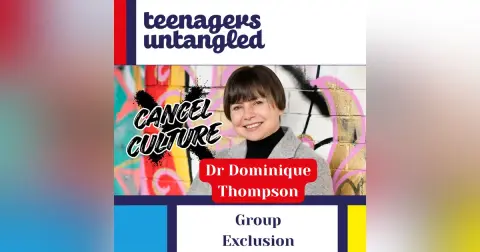
In this episode of Teenagers Untangled, I’m joined by Dr Dominique Thompson, a physician and expert in supporting young people, to explore why teenagers can be so quick to exclude someone, and why it can feel so difficult to stand apart from the group. We talk about the role of peer pressure, black-and-white thinking and social media—and the difference between challenging hurtful behavior and shaming someone.
If your child is being ostracized, you’ll hear how to support them, work with the school and help them find other sources of connection. And if you’re worried your teen might be joining in, we discuss how to start a conversation that encourages empathy without simply lecturing or blaming them.
We’ll also share practical ways to make home a safe place for difficult conversations—and a simple question that might help a young person pause before they join a pile-on.
If this piece has raised anything difficult for you or your child, Samaritans are available 24/7 on 116 123 (UK).
If you want to read Rachel's expanded thoughts on this topic, click here
Please hit the follow button if you like the podcast, and share it with anyone who might benefit.
You can review us on Apple podcasts by going to the show page, scrolling down to the bottom where you can click on a star then you can leave your message.
Please don't hesitate to seek the advice of a specialist if you're not coping. There's no shame in reaching out for support. When you look after yourself your entire family benefits.
Find all the tips from the episode on Substack:
My email teenagersuntangled@gmail.com
My website has a blog, searchable episodes, and ways to contact me
What would your child do if their whole friendship group turned against someone overnight? Would they join in, stay quiet, or would they be the one who reaches out? Today we're talking about cancel culture, how quickly young people turn on each other, why so many feel they have to join in, and what it means for our children when one mistake can cost them everything. Welcome to Teenagers Untangled, the audio hub for parents of tweens and teens. I'm Rachel Richards, journalist, parenting specialist, mother of two teenagers and two bonus daughters, and my guest has seen the consequences up close. Dr. Dominique Thompson is chairing the National Working Group in the UK on social ostracism. She has written a number of books and guides supporting young people and those who care for them and spent years as a physician helping over 78,000 university students in her GP practice. We're going to look at where this behaviour starts, what parents can do at home, what schools can do, and the one thing you might say to your child tonight. Dominic, welcome back to the show.
Dr Dominique ThompsonThank you. It's uh it's really lovely to be back.
Rachel RichardsOh, we're so lucky to have your incredible knowledge and experience. So thank you so much. Now, I talked about cancer culture in a previous episode and the links in the notes. In it I use the example of OXA student Alexander Rogers' death by suicide. Dr. Thompson, you were actually used as an independent consultant in the review of what happened. And I think I'm getting you right when I quote, it was shocking to hear students were treating each other this way. Can you talk a bit more about what you see as the pylon culture that's developed?
Dr Dominique ThompsonYeah, so that was a particularly um tragic case where this behaviour towards a peer of cancelling them had a terrible outcome. And I was involved as the independent reviewer. But what I'm seeing in my work with lots of schools and universities all over the country is that young people are unfortunately taking a very normal, regular human behavior which has been in existence for millennia, which is to uh shun someone if they are not seen to be behaving appropriately. But what they've done is jet propelled that by not only them personally pushing away that person, but sort of taking the whole class with them or the whole group with them, so that a young person these days can no longer escape from it. So it used to be 20, 30, 40 years ago, if you were seen as having done something wrong or being too different from the group, you could probably escape it in some way when you went home or when you went to your sports club or when you went to scouts, or even just when you went to university. The tragic thing now is that it feels like there's no escape. And that's what we're dealing with that's so different.
Rachel RichardsWow. And you've talked about acting on a sort of unwritten moral code. What's going on there?
Dr Dominique ThompsonSo, young people, when they go through the changes that are we normally associate with uh teenagers becoming a, you know, a young adult, we see lots of things that happen that are perfectly normal, like separating from your family and becoming very close to your peers and your peers' opinions matter the most at that time. You often go through a phase of black and white thinking. Everything is awful or awesome, it's very extremes. And one of the other things they develop is a very strong moral code sometimes. And people who are not seen as following that same code, well, that feels like a threat to them. And I can understand where they're coming from, but I think what we need to do is help them to manage it differently and perhaps a less black and white way, or saying you're no longer in the group and no one's going to talk to you anymore, and think about how we manage that more as a community to change that behaviour. Because we recognize that it is a normal human behavior to push people away that are a threat to us. It's just how we manage that that maybe needs to be looked at.
Rachel RichardsWhere do young people learn that turning away is the moral choice? Is it is that in primary school friendship groups, or do you think it's starting with phones? Have you sort of pinpointed where this might be starting?
SpeakerWell, I mean, it's interesting that you ask, have we pinpointed it? One of the most interesting things about chairing this national group is we've discovered there's almost no research on this in the UK. So there are a few studies from overseas, and we are using those, but they almost never look at, say, school groups or um university students. So we're working with very little data. And so the first thing to say is when people ask me, for example, is it more in boys or girls or whatever, I don't have the answers because nobody knows. Wow. So we are going to be looking at that as part of the group. But in terms of where it comes from, I mean, we can go right back to the beginning of uh human uh existence, living in caves together. It was a survival mechanism to all live safely together as a group, as a tribe. You wouldn't survive if you tried to go off and hunt on your own. So you went as a group. So we have, as humans, developed this very strong desire to be part of the group, part of the tribe, on the inside of the group. That is something that teens have, if you like, no control over. That's just human evolution. So as they get to that age, they know they need to be part of a tribe in the broadest sense for survival. That's how it works. Now, of course, they can make decisions about what isn't isn't acceptable. And maybe one of the things that has changed over the last 10, 20 years is that there is perhaps a tendency for young people to have become slightly more sensitive to what may or may not be upsetting and to speak up about it. So the same things have probably always been upsetting, but they're more likely now to feel empowered to speak up and say, that's not how I see it, that that offends me. This is not to say they are snowflakes or anything like that. I absolutely don't believe in any of that. But it is that they have become empowered to speak up. And that may mean that in their black and white way of thinking, they tend to say, that's not okay, and therefore the easiest and most straightforward thing to do is just distance themselves. The real issue to me is that they take the group with them. It's absolutely normal for one person to say that somebody else is unacceptable to them in some way, to find them offensive or whatever. Those are nor normal things. We all have people like that. But we don't need to tell the whole class or the whole team to not speak to them. And I think that's where we've got work to do. Interesting.
Speaker 1Yes. When it comes to that, I suppose the question for each of the other people who haven't necessarily been offended but are being asked to join in, how much of that would be conviction and how much is it a fear of being next?
SpeakerAbsolutely. It is so hard for a young person to speak up against the group. You have to be a very brave and strong and independent young person to do that. And it's absolutely fair enough for most of them not to want to be that person. So it would be difficult for perhaps just one other person to then speak up and say, actually, let's not do it like this, let's behave in a different way. So I guess our work and part of what we're going to look at is how we move the culture towards being more inclusive again, less polarized again. How do we get everybody to see it as normal to have differences of opinion, to talk about these things? In universities, some universities are now teaching modules on disagreeing well. How do we say I don't agree with that in a civilised, less polarized way? So I'm absolutely not suggesting that we ask individual teens to try and be the one to speak up. That takes a lot in that environment where you want to be part of the group. Although if they can support a person that they know or a friend who is being ostracised, that's wonderful. But can we move the whole culture to being more accepting of nuance, of greyness, not black and white? Can we accept that people make mistakes in life and that that is something we learn from rather than ostracize them for? So obviously it depends on what is the sort of perceived mistake or misdemeanor. I understand that. But we really need to look at how we respond to things as a whole culture.
Speaker 1I love your point about the culture. I want to address that, but I'm also really interested in this black and white thinking that occurs. And we parents do it, where you think, oh, they're doing it differently to me, therefore they disagree with me. So I'm either bad one or are they the bad one? And there's almost this sense that one of them's got to be right or wrong rather than, oh, it's just different.
SpeakerYes, yes. And I definitely agree that, you know, all of us have seen this shift in the last few years. We're all aware of this more polarized society, maybe less tolerance. We've seen high-profile cases of adults being ostracized. Um, we read about them in the news, you know, and some of them with terrible outcomes. So what we want to do is learn from that. As a society, how are we going to role model slightly more tolerant, nuanced behavior? How can we have conversations at home with our teenager where they might come home with some view that you think, oh, where did that come from? Okay, and rather than say, oh, you you can't say that or you can't believe that, which might be our natural reaction, think, okay, that's an interesting view. What's behind that? And have a conversation about it. And the more we can set an example, open the home to being that safe place to have difficult conversations and disagree well, the more likely they are to take that into their other lives. Um, obviously, it's not easy. We've all been there with family members who have very different views from us, and we have to just be politely disagreeing and agree to disagree and so on. But that's a life skill. The problem is that if it's happening at secondary school or even slightly younger, but mostly it starts around the sort of 11, 12, 13 age group, that young person may potentially have the knock-on effects of being isolated and cast out from the group for many years to come. And that is where it can have very negative impacts if we are not able to intervene.
Speaker 1It's interesting, isn't it? Because I know that having read people like Dr. David Yeager and various other people, psychologists who looking at those younger teenagers, that an understanding of the growth mindset and that people will make mistakes and it doesn't define them as a bad person, that people will grow and will change, and that's inevitable, can make a difference to their ability to both be kind to themselves and to other people. Where are we going wrong with getting that message across?
SpeakerSo I don't know that we're getting it wrong when we say, you know, mistakes are normal and good enough can be better, you know, at times than perfectionism. There are lots of messages around that, and young people are hearing that. I think what is interesting, and perhaps is a different thing the last few years is that we've introduced things like bystander or upstander training in schools and colleges and universities. So we are helping our young people to have the skills to intervene if they see or hear something that you know should probably be less acceptable, you know. So that's a really positive thing to try and give them the life skills to do that. But what I think may happen sometimes is that they they either take it too far. So not only do they say, I don't think that's okay, I think you should stop or not say that or do that, but they say, and therefore we are going to impose a sanction. And that sanction is we are no longer going to have anything to do with you. So it's a sort of vigilante approach to bringing that justice. So it's bystander training gone a bit wrong in some cases, well-meaning, but then goes off. The other thing is how we deliver that message of I disagree with you in an environment like that. So we are trying to see if we can move people in schools and so on away from calling out bad behaviour to speaking up about it. And there is a difference essentially between the two in that calling out can be very overly assertive, sometimes aggressive, it's in public, and it takes a shaming approach, whereas speaking up tends to be more positive, supportive, discreet, taking somebody to one side, saying, you know, I know you maybe didn't mean to offend or whatever, but actually I found that quite difficult. Um, and it's how we approach those scenarios that I think has changed over the last few years.
Speaker 1I love what you just said because that's the feedback I get from talking to teenagers is that when you get one person in a room who does this calling out, it sucks the oxygen out of the room, and other people feel like they have to fall into line because it's so so powerful. And it's it's like rather than saying you did a bad thing, you're a bad person. And then they become this persona non grata. And we're trying to actually say, No, here's how because what we want people to do is to be able to say, Oh, I didn't do the right thing there, here's how I can grow and change, rather than I didn't do the right thing there, therefore I must be, you know, condemned for the rest of my life to to friend lack of friendship.
SpeakerIt's hard. It's terrible. And this is one of the reasons that when I give my talks and so on to, you know, in parents' schools and so on, is I make the point that shame is the most negative toxic emotion.
Speaker 1Yes.
SpeakerAnd it changes the way that adolescents grow and develop. And so using shame is actually a very, very negative experience. People don't learn from it, they just become a shell of their former self, really anxious and loss of self-esteem and so on. So I try as much as possible, and I talk to sports coaches and so on. I say, you know, you may not even realize you're using shame because often it was used in the past, maybe that's how they were trained, but it is a very negative emotion. You will not get the best of your team, for example. So I think it's really important that we understand for young people to talk to their peers in a non-shaming way is really important and allows for people to genuinely learn from mistakes rather than just be absolutely terrified of saying anything at all.
Speaker 1I love that. And do you think we can hold someone to account and still not abandon them? You know, what would that sound like between friends?
SpeakerOh, very much so. I think we have to hopefully have the confidence and ability, you know, as we grow and get older and a little more confident, to say, um, you know, something that you said there, I don't agree with that, but you know, we can agree to disagree. Or I don't agree with what you said, I found it a little offensive, but maybe we can think of how you might say your views in the future. We might just go as simple as say it's on a text chat and somebody puts something not okay, and they just go, mate, that's not okay. But it's not in a really shaming way. It's just sort of gently speaking up about it. So yeah, I think, you know, saying that you see things differently and disagree, but that you understand that that's okay, you're going to be able to still be friends, is is the way forward. But it isn't easy when you're young and learning the way that's why we as parents and so on have to have to role model that. Yeah.
Speaker 1It's interesting. My ex-boyfriend was very kind to me because I hadn't been taught a huge amount of things. And he used to say to me, Oh, no one taught you. Or no one, no one explained this to you. And it wasn't that I was doing horrible things, but but he just assumed that nobody had actually showed me. And I think that's a lovely way to actually raise it with someone else, where you say, Oh, it sounds like nobody actually explained to you that that's that's not a very nice thing to say. You talked about the culture. To what extent do you think the online world that our kids are being exposed to is fueling this? Because I know having read Dr. Jamel Zaki's book, Tope for Cynics, he has done huge amounts of research on polarisation and how people who are, say, conservative say they would vote, and then what they think the other people who are Democrats would would do, and vice versa, and found that they always think the people on the other side who think differently are way more extreme, way more violent than they actually are in real life. And that he thinks has been fueled by social media.
SpeakerWhat do you think about that? So there's no doubt that social media plays a part here for especially secondary school kids, because it's unfortunately the mechanisms through which these decisions to cancel someone are spread often. So, first of all, you know, it will spread within the class, within the year, within the school, and then it goes beyond that, usually fuelled through social media. And I've had a teacher say to me that, you know, he'd been doing this job a very long time. And in the past, if somebody was sent to Coventry, as we probably called it then, um, they could get ahead of it because they could speak to the person who'd been isolated, they could speak to the person or people who were doing it, and they could essentially have a conversation, mediate it, and get ahead of it. He cannot get ahead of it anymore. He said it spreads so fast, it's gone off in different directions, it's like fuel on the fire. And that is part of the issue here is we're never going to get ahead of it and hope that social media, you know, is the answer or the solution. We've got to stop it developing and getting that bad and people cancelling each other for these perceived misdemeanours or for being different before it becomes such um a widespread problem for that young person. Because if they can't escape it, if they leave school, but even if they go to another school and it follows them there, or they leave school and go to university and find that people there have been told about it, it can be so hard for them to move on from that. So I think you know, we're looking at that's why I was talking about the community approach, all of your needs to shift how we think about this.
Speaker 1Yes, and have conversations with the schools and with other parents. What would you say to a teen who says, Look, I didn't do anything, I just stopped talking to them.
SpeakerYes, I think it's important to recognise and acknowledge that people are allowed to choose who their friends are and who they want to socialize with. I'm okay with that, of course. We all have our natural personal boundaries. It's how we do it, it's how devastating it can be if somebody is totally isolated. It's whether you tell the whole class as well not to speak to them. There are lots of things that happen that make a situation that is difficult much worse, where it doesn't perhaps need to be. So I guess what I'm saying is that we have always had normal human reactions, which is that I perhaps don't want to socialise with that person that much. But even just acknowledging their presence is more helpful and positive than completely blanking them. Obviously, that you know, that will be a personal decision. But as I said, not spreading it, not making it an entire class or whatever is the bit that we're trying to get ahead of, really, because it's so difficult for their mental health. We know that being ostracised is very negative for, you know, causing anxiety, depression, and you know, many other complex mental health issues if it's not resolved.
Speaker 1It's the thing that kids really fear, what it's one of the most fearful things. Um I have seen instances of a child being ostracised and then kids in the group contacting other people on social media saying, why are you talking to that person? They're a bad person. And this is the difficult thing to nail down, isn't it? So given that we we we can't control all of the the the what's going on online, how can we create a home that's a place where it's safe to get things wrong, including saying something clumsy, and and help them understand, like model that entire environment that we're trying to then you know create outside the home?
SpeakerYeah, so for me it starts by talking about this cancelling behavior, because it is often a behavior that we talk about as existing in the shadows. It's hidden, it's shameful, it's difficult, no one wants to be associated with it. Even if you're not the direct person, we know that people associated with it, so anyone in that community group is affected negatively. So you don't have to be directly involved for it to have a bad effect. So the first thing is for families to have gentle, open conversations at the appropriate moment to say, oh, you know, I heard this talk about people cancelling each other, and you know, does that happen in your class? And and what does that mean? And and and, you know, is it always the same people or just trying to have a general conversation about it and then thinking about never making it about your teen directly? Well, how how how could people have managed that differently? Do you think there's anything they maybe should have said differently, or how would we have talked about that? So the first thing is to just have those conversations, which means that hopefully if your teen is then affected directly, they know that you're aware of this issue. You're not judgy and immediately overreacting, you know, they can come and talk to you about it. Because the worst thing is when they hide it and tell no one and they live with it. Alone. And that is really, really difficult. So the first thing is creating that safe family environment. And then I think, as we were sort of saying really, about role modeling how it's okay to have different opinions. You know, why don't we talk about a difficult topic and try and see how we feel? Because it raises emotions and how we can have that conversation. And it might be something political or it might be about religion or it might be about which subjects you're studying. I mean, there's lots of different things that are emotional and tricky. But it is so important to be able to have those conversations. And one thing I would just try and sort of differentiate here, which you know is helpful maybe when we're thinking, if a young person is potentially ostracized because of something they believe, so it's a political or religious belief, for example, often that has a much less negative effect on them because they are still part of a group who all believe that. They still have a tribe somewhere. If you are ostracized for who you are, being different, or something you specifically are thought to have done wrong, that is much, much harder because it's linked to the shame rather than a sort of self-righteous, actually, my views are valid. And it is much more isolating generally. So it's really important that people perhaps m won't like it, but they might be sort of pushed away by certain friends because of their beliefs, but there will be their people somewhere. They'll find other people.
Speaker 1What do you think it is about our culture where we've got teenagers joining groups that are very definite about their political viewpoints that will then see anybody who doesn't agree as being wrong, bad, evil, whatever. Have we seen a rise in that? Because it seems like we have. And what's behind that?
SpeakerYeah. So some of this is coming from uh the shift over the last few years in having quite a lot of big cultural movements that are really important and which I fully support, which are hashtag MeToo, Black Lives Matter, and so on. So it has become, you know, much more important and valued to speak up and um, you know, say that you are, you know, um feminist or whatever. All of these positive things have been aired and shed light on, and people can stand up and say they're part of those. So we live, you know, much more in that society where people are allowed to have their views and their opinions and they've and they are valued valued for that. But we've also got um this polarization because as those views come up, it will naturally lead to people disagreeing on different things. And so, you know, society has become more polarized. We've seen that, you know, at a at a world level as well. We then unfortunately do have some social media influencers um who may sit on the side of, you know, maybe on the right side of moral high ground of on some particular viewpoints. They might say, yes, they're pro sort of women's rights or whatever, but then they'll say, so guys, if anyone in your group speaks out against this, cut them off. Have nothing to do with them. And there are people who have said that in their podcasts and so on. And that is the wrong message. That is the wrong way for us to function as a society. If someone disagrees with you, have a conversation. Talk to them about it, don't become super entrenched in your opinions and you know, oppose each other and disagree in a way that means you can't meet in the middle. At least try to have a conversation. So we are working in a world where we've got these big cultural movements, which are great, but young people are being asked to take sides and cut people off if they don't agree.
Speaker 1Yes. Fear less, wonder more. Just do the wondering. That's very interesting. Why have you taken that opinion? Yeah. What do I do if I'm a parent whose child has now been ostracized?
SpeakerYes. So, first of all, that is an incredibly emotional and difficult position to be in. So I I really feel for those parents. I think the the important thing here is to be absolutely clear with your young person, you are on their side, you are part of their team, that you believe them when they tell you whatever's happened, even if your natural instinct is like, oh, really? Is that exactly what happened? It doesn't matter. That is what they're experiencing. So believe them, be on their side, listen to them, talk to them so that you agree together what's going to happen next. Because what you don't want to do is make things worse inadvertently. You know, you're you're going out there with the best of intentions, so you want to immediately respond. Well, actually, it's better to take a moment and think about it. So don't minimize what's happening to them, you know, don't be like, oh, it'll get better soon, or they'll grow out of it or whatever, because unfortunately that just doesn't seem to be the case. Nor do you want to be the overreacting, really angry, you know, saying things like they're causing you psychological harm and using language that's just not helpful to that young person. And I know it all comes from a good place, but let's just take a breath, talk to the school, but with the young person sort of being aware that you're doing that, um, make sure that they are involved in any decisions about next steps or mediation meetings or anything at all. And then where you can, I guess for the one of the most positive and protective things you can do beyond being the family support is try to build networks elsewhere. Now it isn't easy, perhaps in this circumstance, maybe the the word has got out and it's difficult. But if you have other peer groups that they can be plugged into, so family friends with kids that are maybe not so involved with the school, sports teams or other activities, maybe they're online mates, you know. Who knows? It's their gamer mates that might be the ones that they turn to and still feel part of a community with. That is fantastic. It is so important for them to still feel part of something. So be the safe place, listen and believe them, give them hope that things are going to get a little bit better, but most importantly of all, try and get them to connect with others gradually and slowly so they're still connected to peers.
Speaker 1Yes. And keep the faith. Keep the faith that they will meet other people, that they can grow and change. And if it was genuinely something that they did that upset people, you know, they can learn from it. It's this growth, isn't it, that we're trying to encourage in our kids. Yeah. I love your advice. And if a parent says one thing tonight that can help their child be a little less quick to cancel, maybe a little more compassionate, what do you think that could be?
SpeakerI think for me, it's just trying to remember that we are all human. It sounds like a cliche, but you know, none of us is flawless. We all make mistakes. And I I've always lived by the thinking of how would I feel if that happened to me? How would it feel to me if that happened? So just trying to build a slightly more tolerant, less polarized society, talk to your young person about thinking about how that would feel if they were on the receiving end. It might just give them a moment to pause and think about what they'll do next.
Speaker 1Yeah, and I interestingly, I mean, what I do with my kids is I often talk about what it was like for me growing up, and that we frequently had people in my school environment, my A-level college, my university college, who had very, very different viewpoints. And then this was not a thing. And I think it's very hard for young people growing up when they're surrounded by this to know that this is not how it used to be. It's not this, it doesn't have to be this way, and that it's actually much more healthy to be able to engage with people and have conversations where you both grow and learn and try and see their side. Um, and also I think we have to stop talking about other people in black and white ways as well, don't you? I mean, I I you know I try I we've all done it at some point where we've seen somebody doing something and we say something and then think later, oh no, actually that wasn't really the right way of uh of framing it. And we can even go back and say, you know, I said that, and I don't actually, they're much more of a human being than just that one phrase that I used about them. Dominique, what I if I'm so happy to hear that something's being done to look at how we can change this um atmosphere because I think it's damaging and I'm very concerned for our youth and and us as parents having to raise children in this sort of environment because it feels really claustrophobic and and stressy and um you know lacking in fun. And I think we need more fun in the world. Um, I know that sounds rather shallow, but that's that's how I see it. Right, so you've got quite a few guides. You have an email newsletter that goes out regularly. Could you just remind us how we get hold of you?
SpeakerYes, of course. So my growingagrownup.com website has lots of free blogs, and you can sign up to the free newsletter there if you like. And there is a there's a free blog on there about uh you're not my friend anymore. So there's a whole blog about it there. Um, if anyone ever wants to email me, of course they can, and then lots of advice in my how to grow a grown-up book as well. So hopefully there's lots of information out there for people.
Speaker 1Yes, and also if your teenagers going to university, you've got some fantastic guides about that too. So yeah, thank you so much, um, Dr. Thompson. Fantastic to have another conversation with you. If you want to get in contact with me, it's teenagersuntangled at gmail.com. My website's the same teenagersuntangled.com. My substack is teenagersuntangled. Substack.com. It's all the teenagers untangled. Uh that's it for this week. Thank you so much for being with us. Um have a great week. Big hug. Bye bye. Thank you.