


 Apple Podcasts
 Spotify
 Castro
 RSS Feed
 How to Be a Calm Parent to Teens using Boundaries with Diane Sorensen
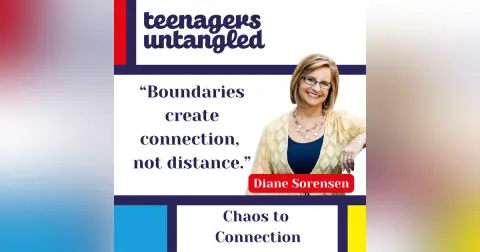

Ask Rachel anything Are you tired of yelling at your teen – and hating yourself afterwards? In this episode of Teenagers Untangled, I talked with parenting and relationship coach Diane Sorensen about how to stay calm with teens, stop power struggles, and set healthy boundaries without becoming a pushover. If you’re dealing with eye-rolling, “disrespectful” attitudes, shouting matches, and constant tension at home, this conversation will help you: Understand why you get so triggered by your te...
Are you tired of yelling at your teen – and hating yourself afterwards?
In this episode of Teenagers Untangled, I talked with parenting and relationship coach Diane Sorensen about how to stay calm with teens, stop power struggles, and set healthy boundaries without becoming a pushover.
If you’re dealing with eye-rolling, “disrespectful” attitudes, shouting matches, and constant tension at home, this conversation will help you:
- Understand why you get so triggered by your teen’s behavior
- Shift from controlling behavior to nurturing real connection
- Use simple emotional regulation tools to pause before you explode
- Tell the difference between calm parenting and permissive parenting
- Create healthy boundaries that reduce resentment and build trust
- Repair after you’ve shouted and show your teen that change is possible
We talk about creating boundaries, unpack practical strategies like the PARR method (Pause, Acknowledge, Respond, Reflect), how to reframe “disrespect” as information, and why owning your triggers is the fastest way to transform your relationship with your teen. If you’ve ever thought, “I promised I wouldn’t parent like this, but I don’t know how to stop,” this episode is for you.
Diane Sorensen
Please hit the follow button if you like the podcast, and share it with anyone who might benefit.
You can review us on Apple podcasts by going to the show page, scrolling down to the bottom where you can click on a star then you can leave your message.
Please don't hesitate to seek the advice of a specialist if you're not coping. There's no shame in reaching out for support. When you look after yourself your entire family benefits.
Find all the tips from the episdoe on Substack:
My email teenagersuntangled@gmail.com
My website has a blog, searchable episodes, and ways to contact me
00:00 - Why Parents Yell at Teens: Introduction to Calm Parenting with Diane Sorensen
00:59 - From Chaos to Connection: How to Stop Controlling and Start Connecting with Your Teen
02:10 - Teen Eye-Rolling and “Disrespect”: What It Really Means and How to Respond Calmly
05:30 - Teen Chores, Responsibility and Respect: Why Their Behavior Triggers Us
06:00 - Calm Parenting vs Permissive Parenting: How to Set Limits Without Being a Pushover
08:52 - In-the-Moment Anger Tools: How to Stay Calm When Your Teen Triggers You
11:17 - PARR Method for Parents: Pause, Acknowledge, Respond, Reflect (Not React)
12:26 - Old Stories and Assumptions: How Your Childhood Shapes Your Reactions to Your Teen
16:22 - Teen Behavior as Communication: Understanding What Their Behavior Is Telling You
17:30 - Healthy Boundaries with Teens: Ending People-Pleasing and Self-Abandonment
20:45 - How Boundaries Build Connection with Your Teen and Reduce Parental Resentment
23:37 - Rebuilding Trust After Yelling: Showing Your Teen You’ve Really Changed
26:51 - Modeling Emotional Growth: Teaching Teens That Change and Repair Are Possible
29:12 - One Powerful Mantra to Stop Yelling at Your Teen
Why Parents Yell at Teens: Introduction to Calm Parenting with Diane Sorensen
SPEAKER_00Most parents don't want to shout at their children, but we all do. Why is that? And are there definite things we can be doing to bring more calm into our lives as we go through the teen years? Hello and welcome to Teenagers Untangled, the audio hug for parents going through the tween and teen years. I'm Rachel Richards, journalist, mother of two teenagers and two bonus daughters. And if you're new to the podcast, I don't tell parents what to do. I'm interested in helping us think afresh to turn us into fearless parents so we fear less and wonder more. With us today to help us think about why we end up in a state where we're shouting at our kids and how to set and hold boundaries without being a pushover is Diane Sorensen, a transformational coach specialising in parenting and relationships and host and creator of the Chaos to Connection podcast. Diane, welcome.
SPEAKER_01Thank you so much. I'm so happy to be here.
SPEAKER_00Now you say your podcast is about moving from chaos to connection. When you say family
From Chaos to Connection: How to Stop Controlling and Start Connecting with Your Teen
SPEAKER_00is living chaos, what do you mean by that?
SPEAKER_01Usually what creates the chaos is us trying to control our life, us or even surviving it, right? And so surviving it means that we are trying to control everybody and everything. Um, whether we're aware of that or not, because I certainly wasn't aware that I was doing that. And then moving towards a more connected way of being. And that's it's connected within ourselves so that we can be more connected with others. Uh, it's really moving from these inherited fear-based or approval-based patterns to a more connected-based pattern, which involves ownership and letting go. What I call uh control-based or fear-based, those involve blame and approval. So kind of both have two sides of a coin: blame and approval on one side, and ownership and letting go on another side.
SPEAKER_00Interesting. Because you're talking about parents wanting to have
Teen Eye-Rolling and “Disrespect”: What It Really Means and How to Respond Calmly
SPEAKER_00control. I think we can all relate to that. And for example, you know, when a teenager rolls their eyes and says rude things, a grown adult can feel very threatened by that. And I think there's a control element in that fear that that it provokes. What is happening for that parent when yeah.
SPEAKER_01So I think when that happens, what are we making it, what am I making that mean about me? When my child rolls their eyes, I'm automatically making that mean something about me. And our reaction is to manage their behavior. So this is really a shift, a paradigm shift, really from managing behavior to nurturing relationship. And that's a big shift. Um, but we can do that in those instances. Um, when our child rolls our eyes, we can turn inward and go, okay, what is happening for me right now? Because this is where responsibility begins. You know, we all talk about wanting to have children who are responsible. And I think there's so much embedded in that. There's almost this moral standard. Um, so it can be very frightening if we think our children aren't being responsible or respectful. That's another one that's kind of embedded in this moral um way of being. And I think oftentimes what has happened um up till now is we want to see it externally, right? Um, so we end up ourselves performing responsibility, you know, on the outside, you know, see how responsible I am, kind of this proving how hardworking I am. We we do this through achievements, being productive, and caring for everybody. And that somehow shows, performs responsibility. So we often want to see that in our children. You know, we'll give them chores. And if we see them doing the chores, it kind of relieves us and we make that mean something about us. If we don't see them doing the chores, that frightens us, and we also make that mean something about us. So we react to that and we try to manage their behavior, which is not responsibility. Um, and so there's a detangling of that. Responsibility really is what I'm feeling in that moment of the eye roll. And owning that those feelings are yours, it may trigger you to see an eye roll, but that trigger is yours. And you, you know, I need to own that. It's not my child's job to take care of my emotions. And I'm gonna leave them with their side of it. And so I could get curious. I could get curious about that and ask, you know, oh, you, you know, your eyes went like this. That's telling me you might seem frustrated,
Teen Chores, Responsibility and Respect: Why Their Behavior Triggers Us
SPEAKER_01um, you know, or whatever that is. And they'll tell you if it's not frustrated, no, I'm angry. All right, tell me more about that. Um, and so we can get curious and and have conversations with our kids rather than reacting to stop it um or change it somehow.
SPEAKER_00I think most people now know that you can't control other people. You can only control your own emotions. And yet when you're in your own home, somehow
Calm Parenting vs Permissive Parenting: How to Set Limits Without Being a Pushover
SPEAKER_00that just doesn't translate.
SPEAKER_01Right, right. And I think sometimes we take ownership of things that are not ours to take ownership of. And that's the other side of the coin, is the letting go part. Their struggle is not mine to own, their behavior is not mine to own, their emotions are not mine to own. But I can get curious about that and, you know, be supportive without having to try to change them in some way.
SPEAKER_00A lot of parents worry that if they don't enforce things, they don't uh talk about the behavior, then somehow they'll become a pushover and their child is going to be a nightmare. Um, what's the difference between calm and permissiveness?
SPEAKER_01Yeah. So I think this ownership and letting go, some people will, you know, might see letting go as permissiveness. But what you're actually doing is you're handing them back their stuff, you know, their emotions, their struggle, their, you know, whatever is going on with them so for them to sit with instead of taking it on ourselves. So permissive means that you're just going to ignore it and hope that it will go away. Right. Right. Yes. Um, rather than allowing them to sit with it. And here's what I find is that when we allow them to sit with their own part of, they come back oftentimes to repair with us. Um, and when we lose our stuff and project it onto them, because there's times that what you were just saying, we yell at them, right? We not only roll our eyes, we yell at them. Um and we can go repair with them, just letting them know that you're taking ownership. Hey, I um you remember this morning when you know XYZ happened. Uh I reacted in a way that I'm not proud of, or I didn't want to react that way. And I just want you to know that I'm working on that. My emotions are not your job um to take care of. That is my job. You, I'm gonna leave you with how you feel about it. Um, just wanted you to know.
SPEAKER_00I love that. And I think being explicit about it is really important. I think it's quite hard to learn how to do that, particularly if you've come from a family where apologies never happened with your own parents. So it's kind of breaking those cycles, isn't it? And so to stop ourselves from having that reaction to the eye roll, do you have any questions that you could suggest parents could ask themselves
In-the-Moment Anger Tools: How to Stay Calm When Your Teen Triggers You
SPEAKER_00before actually reacting?
SPEAKER_01Yeah. So acknowledging in the moment, I am triggered. I am tri not you're triggering me. I am triggered and just stop, physically stop, take a breath, and notice what's happening inside and take ownership of the anger, the the whatever it is, you know, where is it? It's in my chest, just breathe into that so that now you've taken a pause and you can respond rather than immediately react. And this is a practice. We have to practice this over and over and over. When we know that things aren't going well, or we seem to be in power struggles a lot, um, and we're willing to learn new things. Oftentimes we want to learn it and then have it mastered. Yeah. And that's not how it is. We we learn it, we practice integrating it little by little. Um, and over time we will master it, but that takes a lot of time. And here's the other thing about being willing to practice is that you also have to be willing to fail at it. Because practice also means failing, right? Children, you know, they will be in sporting a sports on a sports team. So you're playing basketball, your child played basketball, or they go to practice. They go to practice not because they've already mastered the skills, they go to practice to get better and they will fail at some of the skills and then they'll practice some more, right? That's the same thing with this. We have to allow ourselves to practice and we have to allow ourselves to fail. Because here's what I how I think about failure. Failure is connection-based. When you are allowing it to happen and you're allowing yourself to look at it, that if you can see something that you didn't see before, that is success. Allowing that failure can actually move you towards success because when you see something you didn't see before, that's the goal. Yes, right? You just change anything or shift from anything that
PARR Method for Parents: Pause, Acknowledge, Respond, Reflect (Not React)
SPEAKER_01you're not willing to see.
SPEAKER_00I absolutely love that. I've actually been writing a Substack series about how emotional regulation can work because it's such an important part of our entire relationship with our children. And one of the acronyms that I discovered when I was doing a podcast episode a few years ago now about how not to overreact was the acronym P-A-R-R, so PAR, and that's pause, acknowledge, respond instead of react, respond and then reflect. And the reflection is the kind of thinking about it afterwards, which we will come on to because I think let's go into that. Um, one thing I'd like to mention, because you brought it up just briefly before, is that there are beliefs that we come up with. There's there's patterns that we've got from our childhood, our own experiences that will tell us things because we fill in the gaps when we don't have the information. And they're there things like, oh, they're manipulating me, or they're doing this on purpose. Um, and I I often remember the mantra, this is it's not personal. It's just not personal. But what do you think is going on
Old Stories and Assumptions: How Your Childhood Shapes Your Reactions to Your Teen
SPEAKER_00there when we have this script going on in our head?
SPEAKER_01Yeah, we often make assumptions, right? And the same assumptions were often made towards us too. So, you know, we'll our our nervous system will get triggered when we see our child doing something that we would label as disrespectful. And what's happening is our nervous system is responding to an old story inside of our head that we remember, not explicitly, we our body remembers the feeling, the sense of being told you're disrespectful. Or having the sense that, you know, I'm in trouble because of this behavior. Um, and so we make these assumptions, you know, oh, they're so disrespectful. They're, you know, they just think they don't have to do what I tell them to do. Um, these are all stories, these are all assumptions. And if you think about it, how does that assumption make you feel? And who what happens inside you when you believe that thought that they're being disrespectful? Yeah. How do I react to my child when I'm thinking you're being disrespectful? Usually that's so great, right? And so then we end up actually not being respectful to them. And, you know, that cycle continues.
SPEAKER_00Um I think one of the hard things is noticing that that's what we're actually thinking. Because quite often we're running the script, but we're not sure that it's there, like we don't notice it's there, which I think you've experienced, uh, you know, one of the things you we experienced in the past. And that's why the reflection part of this par thing is so important, because after things happen, it's so important to think back and think, what was the script? What was going on in my head that made me think that, right? Right.
SPEAKER_01So we can start to practice um creating more positive assumptions. And why would we do this? Because if we create a positive assumption, then what happens inside of us? You know, we could create an assumption of my child's struggling. You know, because really behavior is information, it's revealing what is happening inside because behavior is driven from the inside, right? So there's emotions that drive this behavior. So to me, behavior is really telling the truth of what's going on within this person. And we're kind of like, oh, I don't want to see that, I don't want to see the truth, don't want to, you know, deal with that. And so it's kind of like here's how I want you to act, because that's um more comfortable for me. So one, we have to be willing to get emotionally uncomfortable. Um, and again, getting curious at what is going on with my child. So making a, you know, a more positive assumption, you know, my child's struggling. You know, what if I say that to myself, I tend to react a little bit differently. You know, we can also react and go, oh, my child's struggling and that's because of me. And then again, you know, we oftentimes make everything about our children about us. So I think the thing to remember is their behavior is about them. Yes. And that's ours to own and take care of, we can let go of managing
Teen Behavior as Communication: Understanding What Their Behavior Is Telling You
SPEAKER_01their behavior.
SPEAKER_00And in terms of a positive way of thinking, I've learned to always say to myself, no child wakes up in the morning and says, I want to do badly today. Nobody does that. So if my child is not doing well or not doing their best, my question is, what's happening? What's getting in their way? I wonder what's been going on. Because that's the question. It's not why are they so disrespectful, why are they so problematic, what, you know, why aren't they trying hard enough? There's something, there's a reason why they can't see the reason to try in from in my experience with my children. Um, and I I do wonder when you talk about um, you know, this taking our own experience on ourselves and dealing with our own emotions. There's an element of creating boundaries there that's important. And I've spoken to a lot of parents who find boundaries really difficult. They feel like creating firm boundaries feels very uncomfortable to them, and maybe they're being hard on their child and it's not fair. What are
Healthy Boundaries with Teens: Ending People-Pleasing and Self-Abandonment
SPEAKER_00your thoughts about that?
SPEAKER_01Yeah, boundaries is a journey. Um, boundaries aren't this physical thing. I mean, it can be a physical thing, but we think about them as this is a boundary I'm going to put between us, or this is a boundary I'm going to create, and then you have to uphold it. You know, all of that comes from this fear-based pattern, from this control-based pattern. Boundaries are the opposite. Boundaries create connection. And first we get to be connected within ourselves, even to know what our wants and our needs are. Um boundary is moving from approval-based or blame-based behavior to um ownership is a boundary. Letting go is a boundary, becoming aware and noticing is a boundary. So really boundaries equal ownership. And it's the opposite of self-abandonment. And when I say that, what I'm what I mean by that is we often abandon our own emotions because we've learned that um, well, I learned this is something I learned growing up. One one of the biggest things I learned growing up was don't upset anybody. Yeah. So I also couldn't have upset, upset emotions. So upset, you know, meaning anger, disappointment is a big one, um, frustration, you know, any of these that cause discomfort, really happy was the only acceptable one, pretty much. Um and so um we often abandon our own emotions because we think they're not acceptable or important. Um and so then we we try to take care of other people's emotions. Yeah. And so we abandon ours in an effort to take care of theirs, and now we're gonna make everybody else happy, we're gonna keep the peace, we're gonna avoid conflict, um, we're gonna avoid upset, we're gonna go along to get along, and then we expect that same thing, unknowingly, from our children. And we don't realize that we're creating this. I didn't realize I was creating that same pattern of abandon yourself, take care of everybody else. Show me how responsible and respectful and nice you are.
SPEAKER_00Yes. And I think that's that's a part of it. That's the big distinction that's been happening with this new generation where they're just much more able to talk about, you know, that their own needs than than our generation, where we were just that was not acceptable to have needs and to have ideas about things and thoughts. I think it's it was much more common in our day and age, but we're still hanging on
How Boundaries Build Connection with Your Teen and Reduce Parental Resentment
SPEAKER_00to that until we actually tackle it.
SPEAKER_01Right. And so a couple of your comments about boundaries um being difficult. Yes, if you are that person that is, if you're taking care of other people's emotions, feelings, don't want to upset anybody, boundaries can feel impossible. But I really want the listeners to hear this. Boundaries are possible and they will create connection in your relationships and freedom. I promise you.
SPEAKER_00And explain how that works. How does that how does it how does creating boundaries create connection?
SPEAKER_01Because you're no longer taking all of you're no longer carrying the mental load and the emotional load and being exhausted and depleted and resentful. Resentment is a tail tale sign that you're living without boundaries. And that's where the yelling comes in, and you know, we're suppressing so much until it can't be suppressed anymore, and then there it goes. And then the cycle just keeps going. I was there. I was the classic good girl. I wasn't gonna upset anybody. Everybody, you know, I'd I do whatever it took to get everybody to like me. I could get along with anybody, you know, because I was doing all this stuff. And when my daughter went through her this crisis, I realized, and not right away, it was all detangling. But now living with boundaries, or I'm not keeping the peace for everybody. I am taking ownership of my peace. I am not um I'm not walking on eggshells anymore. I walked through the world for 40 years on eggshells, never knowing that that's what I was doing. But not upset anybody means you gotta walk around on eggshells and not get triggered. Because if you're triggered, then you're doing it wrong. Or if anybody else is triggered, you're doing it wrong. So nobody can be triggered. And that is so incredibly exhausting. Living with boundaries is freedom. And it's not something if you have been living by keeping the peace, etc. This isn't something you can do a lot. You you need support.
SPEAKER_00It's interesting, you mentioned repair, and I think that that's a vital part of this entire piece and this puzzle.
Rebuilding Trust After Yelling: Showing Your Teen You’ve Really Changed
SPEAKER_00Uh one thing that someone messaged me about is a a lovely woman left a review for me. She said, you know, having listened to your podcast, I've really changed the way I do things. And what's I'm struggling with is my kids haven't yet noticed. Like they don't, they don't realize that I've changed. How do I do this? Do you because you've taken people through transformations? How do people, how do parents convey that they've actually grown and learned and changed in a way that rebuilds trust, makes the kids understand that connection's possible and it will be will be honored. Keep going.
SPEAKER_01Other people will notice, and here's the thing, they won't always like the change because they've gotten used to you being a certain way. And sometimes they won't admit they've noticed. Um, so the important thing is do you notice? Are you noticing are you feeling different within your relationship? So what happened with me was I I started focusing on managing myself instead of trying to manage all my children. Um and what happened was I started thinking differently about my own self and feeling differently about myself. And as I did that, I just my energy changed and my relationships started to feel different. And they started to be more connected. People were responding to me differently, engaging with me in an in a different way. And it was so fascinating because it was like all my relationships are changing, not just one, not just the one with my children, but with my mother and you know, co-workers and friends, you know, across the board. And it's like, I'm not teaching them how to do anything different. I am learning more and understanding more about me. And just keep going. That's what I say. Because when, you know, I was, you know, probably in my mid-years or so, with I mean, if you several years in, and somebody people would ask me that too. Oh, wow, I bet your children really notice, you know, how different you are. And at that time, it was like, I I don't know if they do really. Um, they don't say that. Um, however, now um they would definitely say, oh yeah, you're very different than than growing up. And, you know, they'll tell things to the grandchildren, and the grandchildren would be like, What? I can't even believe, you know, that seems, you know, hardly impossible to imagine. You know, I was a yeller. Say, yeah, grandma was a yeller, and they'd be like, I can't even imagine that. Um so, you know, change it's a process. It's a process. And yeah, that's what I would say. Are you
Modeling Emotional Growth: Teaching Teens That Change and Repair Are Possible
SPEAKER_01noticing the change?
SPEAKER_00And I think actually narrating the change to some extent can be a really, really empowering thing. I've been very honest with my girls about the way that I was brought up, how that affected the way that I saw the world and the things that I'm trying to shift that don't happen overnight and do take time. And I think that's really healthy for them to be able to see that nobody comes. I think when I was a young girl, I used to look at adults and think, well I'm an adult, I'll know everything and I'll be perfect. And I think modelling that we continue to grow, we have the ability to change, that it's a lifelong unfolding is a really healthy, powerful thing because they then don't feel, oh my goodness, I'm broken because I can't seem to, I, you know, I've just ruined that relationship, I've just done this. Um, I think in it's it helps everybody if we my my friend talks about it as um bus stops and how, you know, when we move on, we have to kind of remember that we might have left them at the bus stop and we have to go back to the bus stop and collect them and say, look, well, I'm going on this bus on this journey. Otherwise, they might be a bit sort of bewildered and think, well, where do they get hang on? What's happened here? Um, I love that way of describing it. So yeah, imagine that every go on.
SPEAKER_01Something else coming up for me right now around in you said um somebody's listening to the podcasts and always. I think there comes a time too where you've listened to the podcasts, you've read the books, and that only takes you. I mean, it takes you through some shifts, but it can only take you so far. And then again, this is work that we can't just do in a silo. We can't do by yourself. We need each other. Um, and that's what I did too. I came to a point where okay, I read all the books, I went to conferences, I, you know, the podcasts, and um, you know, went to therapy and and I hired a coach and um things were, you know, it took me to another level. Interesting. And that's why I do what I do now too, because I experienced the impact
One Powerful Mantra to Stop Yelling at Your Teen
SPEAKER_01of being able to have a coach.
SPEAKER_00How wonderful. And you've had it first hand, so you know how empowering it can be. Imagine every parent listening forgets everything else we've just discussed and they're about to shout. What's the one sentence that you'd want going through their head before they open their mouth? Take ownership of this trigger.
SPEAKER_01This is mine. This trigger is not about the child. This is mine.
SPEAKER_00Oh, brilliant. Diane, if people would like to get in contact with you, how would they do that?
SPEAKER_01Yeah, well, I'll give you a couple of different ways. One way is to um at the podcast, Chaos to Connection Boundaries and Breakthroughs with Diane Sorensen. So you know chaos to connection. I'm wherever you get your podcasts. Um I'm on Instagram, so you can uh me up on Instagram at DianneSorensen.bb. I'm putting, yes. Yeah, oh great. And I would love to have you send me a message. Um, I have a lot of people sending me messages on Instagram. I personally respond to those messages. So it's not a robot, um, it is me. Um, and then one other way I'll say for those needle movers out there who are listening is I do do one-off breakthrough calls. Um, and so this is just a one-off call to help you see where maybe you're in that um shame approval based uh coin and what will move the needle for you. So you bring a situation, will give you some actionable, practical steps to move that needle.
SPEAKER_00Brilliant, brilliant. Um, I'll put all the links in the podcast notes, so just click on that. I always do a write-up of every um episode that I do, and that's on my sub stack. So if you want to see the full notes and you don't want to have to write it all down yourself, just pop onto there, click the link for that. Uh, you can contact me on teenagersuntangled at gmail.com. My website is teenagersuntangled.com and uh I think that's it for this week. Uh thank you so much, Diane. Lovely to have you on the programme and uh have a big hug from me. Bye bye.