


 Apple Podcasts
 Spotify
 Castro
 RSS Feed
 School Refusal and Teen Burnout: The Parent's Guide with Dr Naomi Fisher
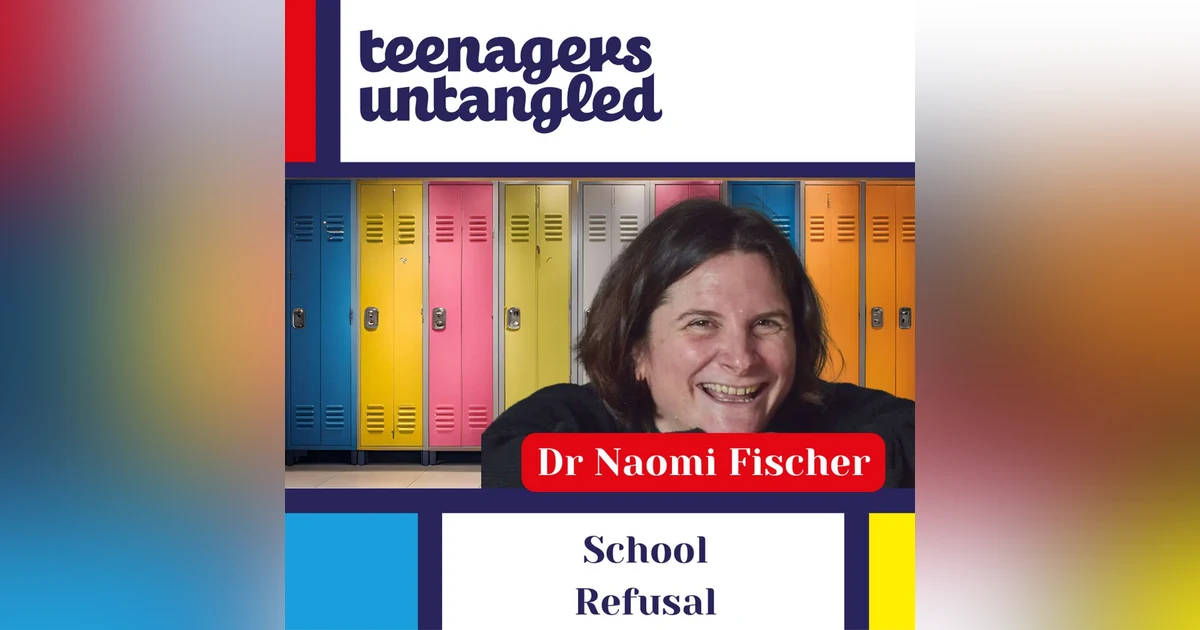
Ask Rachel anything What’s behind a teenager’s struggle to get to school—and how can parents help without turning every morning into a battle? In this episode, journalist and host Rachel Richards talks with clinical psychologist Dr. Naomi Fisher, author of The Teenagers’ Guide to Taking Control of Your Education, about school avoidance, burnout, demand avoidance, and the questions parents often have about autism and ADHD. Drawing on her own experience of struggling at school and decades of wo...
What’s behind a teenager’s struggle to get to school—and how can parents help without turning every morning into a battle? In this episode, journalist and host Rachel Richards talks with clinical psychologist Dr. Naomi Fisher, author of The Teenagers’ Guide to Taking Control of Your Education, about school avoidance, burnout, demand avoidance, and the questions parents often have about autism and ADHD.
Drawing on her own experience of struggling at school and decades of work with young people and families, Naomi challenges us to look beyond labels and ask what a teen is experiencing, what support they need, and how parents can work alongside them. They also explore the importance of connection, curiosity, and making room for young people to take an active role in their learning.
In this episode, you’ll learn:
- What may be behind school avoidance—and how to look for specific school-day stressors rather than assuming a child is simply refusing.
- How to work with your teen, not against them, while still acknowledging that education needs to happen.
- What burnout can look like and why stepping back may help some teenagers recover.
- How to think about demand avoidance and autism or ADHD diagnoses without letting labels replace curiosity about what a young person needs.
- Why following a teen’s interests and repairing your connection matter—especially when school has become a source of conflict.
For more detailed notes and help on this go to my Fearless Parenting Substack
Please hit the follow button if you like the podcast, and share it with anyone who might benefit.
You can review us on Apple podcasts by going to the show page, scrolling down to the bottom where you can click on a star then you can leave your message.
Please don't hesitate to seek the advice of a specialist if you're not coping. There's no shame in reaching out for support. When you look after yourself your entire family benefits.
Find all the tips from the episode on Substack:
My email teenagersuntangled@gmail.com
My website has a blog, searchable episodes, and ways to contact me
00:00 - Why teens struggle with school: introducing Dr. Naomi Fisher
01:24 - Naomi Fisher’s experience with school refusal
05:43 - School refusal vs. emotionally based school avoidance (EBSA)
08:08 - When school distress is mistaken for a medical problem
10:58 - First steps for parents facing school avoidance
13:10 - Why the move to secondary school can be overwhelming
15:09 - Getting your teen on the same side about school
18:00 - Teen burnout: what chronic stress can look like
20:36 - Do teenagers need time to recover from education burnout?
23:43 - Demand avoidance and the PDA debate
26:31 - Supporting teens with high support and realistic expectations
30:45 - Should you seek an autism or ADHD assessment?
35:09 - Supporting an angry or struggling neurodivergent teen
37:38 - Helping teenagers take control of their own learning
42:32 - Why parents catastrophize about their teen’s future
45:00 - Are we overmedicalizing teen struggles and under-supporting distress?
47:36 - What parents can do when their teen refuses school
Why won't my child just go to school? Why does every request turn into a battle? And should I get my child assessed for autism or ADHD? If you found yourself up at midnight searching for the answers to questions like this, then you're going to love our conversation. It's going to be so helpful. You're listening to Teenagers Untangled, the audio hug for parents going through the tween and teen years. I'm Rachel Richards, journalist, mother of two teens and two bonus daughters. Today's guest doesn't start from how do we get this child to comply. That's fear speaking. She starts from what's actually going on for this child, and that's the wonder. Now, Dr. Naomi Fisher is a clinical psychologist with more than 20 years' experience working with children, teenagers, and families, both inside and outside the NHS, she specializes in autism, trauma, and the way young people learn. She's also the author of several books that have changed how many parents think about their children, including When the Naughty Step Makes Things Worse, A Different Way to Learn, and her newest, The Teenagers' Guide to Taking Control of Your education. She also writes a Substack called Think Again,
where she does exactly that:challenges the ideas we've all been told about how children should behave and learn. Naomi, welcome to Teenagers Untangled.
Naomi Fisher:Wow, thank you, Rachel. What a great speech spiel! You've really, you've really covered my work there. Well, well, I've been really for quite a long time. Yeah, thank you. Well, it shows.
Rachel Richards:Now you said, I think, in the past that you didn't find school the easiest journey yourself. No. What was what was that like for you, and how does it shape the way you see children and how they find it hard?
Unknown:Yeah. So I was a what was called a school refuser at two times in my school career, once when I was five and I started school, and then again when I was about 13 and a half, so 13 to 14, and I do think it's really informed how I saw it, how I've seen it, and how I've worked with people. But I suppose one of the things that I remember very clearly, and actually like I feel very lucky about for being the generation that I was. So this was the late 1980s, early 1990s, and I very clearly remember feeling that I just hated school, and that I really there were things about it which I just found what's the word a waste of my time to be really honest. I mean, when I started when I started primary school, I was already reading. I was an early reader and an avid reader, so I was, you know. And then I went to primary school, and they were teaching everybody to read. So they were all sitting on the carpet learning just Jennifer Yellow Hat and Roger Red Hat, and I could already do this. And I was like, what a way to waste my time! Basically, I didn't really like it. And if you think about it, again, it's kind of thing we wouldn't do with an adult, would we? You know, if you've acquired a skill, we would not make you go and sit in a class of people acquiring that skill for years. You know, reading is a big deal; it takes a long time. It's not like they were going to learn it in a week. They were probably anyway. So there was that aspect to it. So in a way, I guess I started from the standpoint of this is perhaps a reasonable response to actually quite unreasonable requests that we make of children. So when I was older, as a teenager, and I obviously remember this more vividly, I actually moved schools and came. We came. We were living overseas. We came back. I went to a large comprehensive school, and I immediately found that the work just didn't seem very interesting. I found it quite hard to relate to the other young people. They saw me as strange, as foreign. I had a different accent. I did not understand all the cultural norms at all, and I really remember that very clearly. This kind of coming up against the way they did things, which was really alien to the way things had been done in my previous school, and yet everybody just seemed to kind of assume that that was how things should be done, and I was the weird one for not doing it the same way as everybody else, but in addition, I just found the work really tedious, really boring, and I had been someone who loved learning and loved school. So my previous school, I had been you know a high achiever. I was doing extra stuff because I was so interested. Yeah, I was doing extra projects, and I was like kind of on fire with learning, and then I got to this school, and the they were asking us to do things like color things in. I remember quite vividly doing German, and we were asked to color in a bit of paper with German words underneath. And again, I was like, "What is this? You are wasting my time. And what happened to me then, as a teenager, is actually I started to develop physical symptoms, which I think is interesting. I started to my I started to feel ill when I was at school, so my glands swelled up, and my parents were worried. They took me to doctors who did blood tests, and they took me to alternative health practitioners. They took me to an educational psychologist. Everybody was kind of looking for what. What's wrong with you? But I remember being very clear in my head that there was nothing wrong with me. That what was wrong was this silly system that they were asking me to go into because I remembered that things I knew that things could be different, and I do think that that's a massive advantage that I had over other young people who struggle with school, which is that I had been to schools which worked differently and where I had been happy, so I always had this kind of inbuilt sense that this isn't me. Yes,
Rachel Richards:yes. Funnily enough, I had exactly the same experience. My sister and I landed in England. I was 10, she was 15. And culturally, it was such a shock. And so I, you know, and we move schools all the time. So I completely understand what you're saying. So, of course,
Unknown:people like us are able to look at something and maybe not vocalize it very well, but we're looking at it going, "No, this doesn't seem right. But for somebody who's been living in this system, it's the water they swim in. Why do you think there are so many kids struggling to get into school right now? And is school refusal even the right term. Well, there's a lot of debate about that, about both of those things. So I sometimes get a bit flak for using the term school refusal, and I wouldn't use it about a specific individual. It was the term that was used about me, so I was called a school refuser. And now there's a real tendency towards talking about anxiety, so people use the term EBSA, emotionally based school avoidance, and I think that feels kinder. So I think people don't like the idea that school refusal implies that there's kind of some choice on the part of the child, that making it about anxiety or saying it's about emotionally based school avoidance kind of takes that degree away. I actually have some reservations about that because I do think that we take agency away from the child there, and that actually has repercussions as well. I don't think I don't think it's a bad thing for a child to be saying, "Hang on a minute, this is a terrible environment. I don't think I should be there. I don't think we need to remove that agency from them. Do you see what I mean? And say, oh well, they're they're so anxious that they have no choice but not to be able to go. And also, again, from my own memory, I I was highly anxious about school, but I think I had very very good reason to be highly anxious about school. I mean, as well as thinking it was a waste of time, I was also bullied by my peers. So it's like, would it not have been more dysfunctional not to be anxious about school in that circumstances, there was nothing dysfunctional about it. So I just have reservations about removing agency from children, and I I know why people do it. It's because they don't want it to be framed as bad behavior, and I absolutely agree with that. But I think we have to be careful about going right to the end of the end where we're like they can't help it, you know, because I think children should be able to say how things are for them, and we should be listening. I
Rachel Richards:think so, and I think people don't listen. And it's so funny because I skyd a lot, a lot, a lot, a lot. I I did everything to get out of school, and much later, when I'm an adult taking my kids into school, one day I'd said to one of the parents, "Oh, I went to this school at some point, and she looked at me and she said,"You went to that school. We were really scared of the kids in that school, and I went,"Yeah, so was I. You know, that's why I didn't want to go. Yes, yes,
Unknown:and and I think if only somebody had actually, rather than kept trying to identify whether it was tonsillitis that was causing this or whatever, actually said to me, "How do you actually feel about this? Can I just pick up on one thing you said there? Because I think there's also another element of this is the difference between what happened to us and what's happening now. Because you've said they were looking for tonsillitis. In my case, they were looking for glandular fever. So I had the yeah swollen glands, felt achy limbs, all of this kind of thing. They took me to the doctor, tested me for glandular fever. The doctor said it's not coming up on the blood test, but we'll call it glandular fever anyway. And oh. so glandular fever at the time give her anything. It was the glandular fever at the time was the go-to explanation for teenage malaise. You know, teenagers who just couldn't do stuff, and it was a, and it gave it a medical lens, which wasn't justified because it didn't come out on the blood test, but it gave me a ticket to part-time school attendance or not going in all the time. You see, so they medicalised it, but they medicalised it in a different way to be medicalised now because now I am 100% sure they would have been sending me off for autism assessments, yeah, and right, and looking at is this neurodivergence because that's how we now think about people who are struggling at school. We particularly teenage girls, I think, who are struggling at school, we tend to think it must be because they're autistic or because they're different in some way. And the thing about the glandular fever explanation was nobody assumed that was going to be lifelong. You know, it was it was like she's got glandular fever. Okay, fair enough. She didn't, but never mind. But but there was a recovery built in, and I find it interesting that now what we're doing is giving children, teenagers, a diagnosis, often because there's a real. Clash between them and school, and it's a permanent diagnosis. So autism and ADHD are lifelong diagnoses. We give them that label, and we say this is because you have a differently working brain, and you will always do so. And I feel lucky that that wasn't mean. I feel lucky that I was able to externalize it. And actually, what happened to me is my parents moved cities? I went to a different school. I still struggled. I still found that school harder, but it was much better. And then I went on to sixth form and I went on to university, and I thrived. And I
hadn't picked up this message:there's something wrong with me, which means I won't be able to do these things. And unfortunately, I think a lot of our young people are being given that message.
Rachel Richards:Let's say my parent with a child who is, as you say, emotionally based school avoidance, which doesn't make a very good headline. Which is one of the reasons I imagine they don't use it that much. But let's say my child is is trying to resist going into school. To school,
Unknown:yes. What is the best first step for parents who are dealing with this. Well, this depends on the age of the child, yes. Because if they're a younger child, they're very unlikely to be able to tell you what it is. They'll just not want to go. So I think the first step is to go in and speak to school and see if you can find out what's going on at school. Some schools are really open to that. Other schools really aren't. Sometimes parents ask me how I can how they can convert a school from one that isn't open to discussing it to one that is. Have not found a method to do that. I just think it often comes down to the personalities involved and to what their experience is of children who are struggling to go to school. But sometimes schools can do things which really make a difference. Like I was talking to a parent recently, and they were saying that their son was really struggling to go into school, and the school starting every day with handwriting, and they were telling all the children, "Come on, we got to go and do our handwriting now. This little boy really, really hated doing handwriting. So if you've put handwriting right at the front of every school day, you have created a difficult situation. So, it could just be as simple as not doing handwriting until a bit later, and starting off the day with something that they'd like to do. Or I've talked to other parents who've said that they really, the child really, really needs a kind of person to connect with at the beginning of the school day because you know you're in the you're in the arms or you're loving family and then you're going into this really big quite frightening environment and perhaps particularly in the early years of school the child feels quite adrift in that you know they're kind of like who who do I hang on to or who can I call mummy I mean literally in those early years, they're calling their teachers mummy, aren't they? Because they're looking for that attachment figure. And if you can find someone at the school who's willing to be that kind of transition person, then sometimes it's someone like the receptionist or even the school caretaker. With one one family said that the receptionist would meet their child and say, "I've got some shredding to do. Would you like to come and do some shredding? Because a child really likes shredding, and so every day started off with a bit of shredding, and that made that transition in easier.
Rachel Richards:Well, I think it's interesting, isn't it? Because children go from being young children in a junior school where they become older and older and older, and then there's this sudden disjoint where they're suddenly the youngest again in a much bigger environment, often where they're expected to move around different classes, deal with new friendship groups all at the same time, while the actual workload starts to rachelt up. And if you look at what's going on when kids go up into their sort of senior schools, it's hardly surprising that some of them are going to really struggle with. So
Unknown:many crash at that stage. Yes, and that's also just when they go through puberty. So we put them through. It is insane if you think about all the changes that we put in place at around 11. You know, as you say, they move from the kind of small world of their primary school where probably they knew most people, recognized the faces, the head teacher might have known their name. When you see year six children at primary school, they're like the respected people of the school. If it's working well, you can see that they're like everybody looks up to them, and they're terribly mature, and they're often taking responsibility for things, and they feel like valued members of their primary school community. And then suddenly, you go up to secondary school, you're now the youngest, and you've got these huge people up the top who are literally fully grown adults with you know with beards and breasts and all sorts of things which you don't have yet. And you are you go and also there's massive increase in demands. You've now got to move around every hour. You might be with a different group of people every hour. You will have a different teacher. I was talking to one teacher at secondary school who said, "I see 250 children a week. There's absolutely no way I can remember all their names or know what interests them. There's just it's an impossible task, and so we've set up these institutions, these secondary school institutions, which I think really un. Fortunately, don't take account of what young people actually need at that stage. We've prioritized academics essentially over child development.
Rachel Richards:I think I think that's that's that's what I hear from so many different people. And we have to be pragmatists. Some of us could, you know, take our children out and homeschool them, but for the parents who have to be pragmatic, I know a single mum whose daughter has been refusing and finding it very, very difficult. Yeah, how do we know the difference between helping our kids just go in and get used to this change? Because as a parent, it's really important that we acknowledge that they're finding this difficult, but also not just going. Oh my goodness, my child's having a terrible time. I'm going to pull them out. I'm going to argue with the school. How do we find that balance? I think it's going to be different for every child. I don't think there's any one size fits all. But I do think that the first the first thing has to be to try and collaborate with the child. Say, okay, so we've got a
Unknown:problem here. Clearly, you're not happy at school. We really do need you to be at school, and I know that lots of parents. It's a non-negotiable because they need the childcare. Really, they need that child to be at school. How can we make that work? And some children actually do have ideas about that. If you're kind of like this, is a common a common goal that we've got. You know, it's not that I'm trying to force you to do this thing that you don't want to do. It's actually just one of those things of life that needs to happen. A bit like putting your seatbelt on in the car. It has to happen because you do have to get an education. That is the law. And as your parent, I have to cause you to get an education. That's also the law. So how can we make this work? So you're kind of like we're on the same side here, because I think what's happens is it gets so combative so quickly, where it's like I've got to make you do this, and children do feel like nobody's on their side. But I think you can be on their side whilst also saying, "I'm really sorry. Yes, I wish that we could do something that you didn't have to go, but you do, because actually that it is the law that you get an education, and I can't home educate you. Well, some children will say you could home educate me. Many parents cannot, and for many reasons. And that decision rests with the parent; has to rest with the parent. And if you say to you know, I cannot home educate you. I'm sorry. This has to happen. How can we make it possible?
Rachel Richards:And I love the way you're phrasing that because so often, even with things where you're trying to change behavior, very often we think,"Oh, what am I? What should I do to make them change this behavior? Ask them because very often teenagers will come up with really good suggestions. Even tweens, young kids, they might have a much better understanding of their own needs and be able to help you through that if you both accept you're sitting on the same side you're not trying to force them to do something. So when kids go into school and we've talked about how much things racheltar what does school burnout look like and how is it different from laziness or depression or any of the other things we could label
Unknown:behavior with? Well, that's a really good question because I don't think we can ever draw distinctive lines. There's a real pressure in our culture at the moment to be saying it's this, it's not this, it's the actually the reality of any kind of description like burnout, depression, laziness. Not so much, not a psychiat. That's more of a moral judgment, I think. Yes, it is, isn't it, than a psychiatric one? And that's very much in the eye of the beholder, I think. But burnout and depression, for example, I think they're just different ways of seeing similar things, and different people will see it differently. So the way I would understand burnout is that when you're going through a situation of chronic stress for a long time without being able to get out of that situation, without there being a way to resolve it. This takes a sort of cumulative toll on your body, and you become unable to bring yourself back to a place when you don't feel stressed, even when the stressful is no longer there. We all go through life; stressful situation happens. We kind of recalibrate ourselves. We manage to get over it. It's not easy, but we manage to bring ourselves back. If it happens again and again and again, at some point we just get to the point where we're like, I don't ever feel okay again. I don't ever feel relaxed or happy. There's no relief, even when maybe my maths exam is done and I passed it. I don't feel a sense of relief. I just feel kind of like. I think is when you're looking at burnout, where it's just like there's never a moment of reprieve. There's never a I'm okay again, and there's a sort of flatness to it all. But I don't think it's distinctly different to depression. I know people write articles about this, but really, I just think it's a lot about it is the lens that you see it through. The World Health Organization, who define burnout, they say it's not a medical problem; it's an occupational problem, which I like because what they're saying is this isn't that something's medically wrong with you. It's that your occupation, and they're talking about adults and work, is chronic. Stressing, and your body is reacting, perhaps in the way it's meant to react to chronic stress. You know, it's like so many of us have this experience, don't we? Of you're doing a very stressful thing at work, and you go on holiday, and you just get ill really quickly. Yes, you know, you stop, and you're just like, yeah, it just is what happens, and it's your body's way. I think of saying enough, and I think burnout is similar. It's like your body's way of going just no more. You cannot keep driving yourself through this situation anymore, and that's a protective, natural, functional response as opposed to something gone wrong.
Rachel Richards:It's tricky, isn't it? Because I think my daughter struggled with this, and by the time she was 16, she'd had enough. And we said to her, "Fine, just leave education as long as you legally you have to be working and studying at that age. And she took a whole year working and two jobs. And I said, "You study anything. I don't care what it is. Just study. Yeah. And and at the end of that, she had really, really come back from that and recovered, and is back in education through her own choice. It was never something we pushed on her, yeah. And but it's hard to know, isn't it? At what when you can do that, and whether you can do that.
Unknown:Yes, it is, and it's also, I think people are very fearful of it when it comes to teenagers, which again I think is strange because you know we we accept that adults get burnt out, and in adult life, it is okay in most careers, at least, to say actually I need a break from work. People do things like that, don't they? Like they say, I'm going traveling around the world, and I always think that's kind of a way of saying I need yes a sabbatical. That's the other way, or I'm taking a year to write a book, or I'm going to do something that takes a step out of this career ladder. With teenagers, we are all obsessed with their ages. You know, you've got to do GCSEs at 16, otherwise you're going to be behind. You've got to do A levels at 18, even if you're behind. I mean, even if a teenager gets pregnant and has a baby, we still kind of think success is then back on that in that school. You know, back doing their exams with everybody else. Whereas for adults, if you have a baby, you might take a year off of maternity leave. But it's like we've got this-I just think very strange obsession with teenagers of keep marching on no matter what, and we tell them that we say to them, "You can't stop; you'll get behind. And they hear that from other teenagers. Yes, behind what? I mean, the life. You know, it's so. Yeah, I think that actually contributes to this burnout problem that we're having with lots of children and teenagers because they honestly feel like there's no way out of this. Like you're, you know, you're looking at education stretching out before you for years, and there's no get-out clause. You cannot quit, at least in a job. If you're, I've had some very stressful jobs, and the idea that I can quit this job is sometimes all that keeps me going. You know, it enables me to keep doing the job, knowing I do not have to do this job for the next five or seven years, and yet we deny that of children,
Rachel Richards:isn't that interesting? And in some systems, like in I think in Ireland, they build it into the system. At 16, kids take a year out normal. Oh, do they? And I didn't know that. That's what I was told by someone who's educated the kids. Though I haven't double checked it, but that makes so much sense to me. Some kids might want to carry on. I have so many conversations with people who talk about kids taking time out, kids dropping a year, particularly boys. If you look at all the the people working in the the space of young boys in education, that so many of them are saying red shirt them. You know, let's start them later. Let's not try and force them to sit down when they can't.
Unknown:Exactly, we're storing up problems for later life by doing it. We're just you know, and we don't need to. Why are we so obsessed with making them do it so quickly?
Rachel Richards:Let's talk about demand avoidance because again, this is another area where there are cynical terms for demand avoidance, and then there are people looking at their teenagers, going, "Why won't you just do what I tell you to do? What's wrong with you?
Unknown:Okay,
Rachel Richards:how can we tell whether we've got a teenager who's genuinely just going through being a normal teenager, and they are trying to gain ownership over their lives, and and somebody who's got a real problem.
Unknown:That's a very good question. So it's interesting you say there's a clinical term because actually there isn't really a clinical term. So pathological demand avoidance, which is what people use, is not a clinical diagnosis. It's not in the diagnostic manual. It was just described by a psychiatrist in the UK in the 1980s, and then it it really met Mum's net. I think in the early 2000s. So I did a PhD in autism. I finished it in 2002. Nobody was talking about pathological demand avoidance or demand avoidant behavior at the time, it was just not part of the discourse. And then by the time I had my own children, and I was on Mum's Net 1015, years later, it was everywhere. Pathological demand avoidance was everywhere, and the National Autistic Society had it listed on their website as a form of autism. So it had kind of come. From nowhere and had then been legitimized. I have mixed feelings about that, partly because it can pathologise behavior that has many, many different roots and has many different reasons, and some of which again might not be dysfunctional at all. So, if I think again about myself refusing, in quotes, to go to school, saying no to school, I don't think that was a. I wasn't being avoidant of demands in because I I was saying no to something that was harmful. Do you see what I mean? And it pushes all of these things into one package. But also that it does often lead people to think, okay, there's there are people out there saying you know PDA is a neurotype. It's differently wired brains. It's due to a fragile nervous system. Therefore, your only root is radical acceptance of this. And parenting is always a balance. The whole parenting journey is, I think, can be thought of as this balance between when do I protect them and keep them safe, and when do I push them a little bit and help them see that the world is out there and challenge them. That's changing all the time, isn't it? Because you know what you might do for your three-year-old, totally different to your 15-year-old. The goalposts are changing all the time, but you're still doing this balance of how much do I need to nurture and keep you, protect you, and how much do I need to be just just gently expanding your comfort zone, just gently showing you that I'm confident that you can manage new things.
Rachel Richards:Yes, it's that belief in them, isn't it? David Jago talks about high support, high expectations. How do we, let's say, our child is avoiding things that we think they should be doing.
Unknown:Yes.
Rachel Richards:What's the best approach?
Unknown:So it depends what they're avoiding, and I think again the first question ideally needs to be a question with them of you know these things need these if they're things that really need to happen these are things that need to happen. Clearly, it's quite hard at the moment. How could we work on that together? How could we change that? Again, there are so many things that come under this blanket term of demand avoidance, because it could be that they're being asked to do things that they just don't have the skills for yet. You know, particularly with that transition to secondary school, we're putting 10 and 11-year-olds into a situation where they really need quite exceptional organizational skills. You know, they've got to remember what they need each day. They've got to get themselves from room to room. They've got to have the books. They've got to have their pens. They've got to have the right uniform. There are a lot of things that need to go into being a sort of successful year seven in a in a secondary school, which are for some children just beyond what they are capable of managing at that point. You know, just the organizational stuff, and I remember, I meet so many families whose children are desperately struggling to manage things like multiple homeworks. You've got maybe five or six different teachers in a day. Some of them will be giving you homework one day. Some of them will be giving you homework the other day. You've got to remember when it's due, do it, and have it ready for that next lesson. That is a difficult task. It's a difficult cognitive task, which many adults would struggle with, and we're expecting 11-year-olds to do it. And then when they can't, we're and when they can't, we're often saying that might be ADHD. But we're also, if they're anxious about that, then we start to frame that as again another pathology in the child. You see what I mean? So it's demand avoidance, maybe rather than actually this is an unreasonable demand of 11 year olds. It's not really surprising they struggle with it. So there's that element. It could be literally skill development, in which case you might be thinking about how could we make this easier? What are the steps that you need to take before you'll be able to do this, and how can I support you in doing that? It might be things that they actually just don't want to do, which again is different. I sometimes talk about, like the master bedroom. Yeah, exactly. They just don't see it as important. We have one of those in our house. They just is just not a priority, and you know, at some point, you have to let go and allow your teenager to have their own priorities about things that maybe you know don't aren't going to affect them in the long term. So there's that element, and there's an element also of individuation with teenagers. That the the task, you know, psychologists talk about developmental tasks, and the task of being a teenager is really to separate. It's to be your own person to you know learn who you are and that you can make decisions for yourself. You are actually the person who gets to choose if you live in an extremely messy bedroom or not. And at some point, your parent is going to have no influence over that whatsoever because you are going to hopefully be independent, and that's what they're moving towards in that period, so I think parents often feel that as like a rejection of their values. Yes,
Rachel Richards:for sure.
Unknown:But they need to do that. They absolutely need to be able to say, you know what? Yeah, I know you'd prefer me to have a tidy bedroom, but I don't.
Rachel Richards:No, that's my one slice of power, and this is going to be power. Do things you mentioned ADHD there? I'm glad you brought it up. Interestingly, when I was a teenager, I lost everything. I never had anything that was required in the classroom. Some of that was because I lived in chaos at home. Nobody talked to me about the skills I needed. I didn't understand how you did any of this, and I'd get shouted at constantly for this. And I'm pretty sure that nowadays I'd be diagnosed with ADHD as a result. Instead, over my lifetime, I've constantly tried to put new things in place to help me stop losing things, and and it's worked. It's not perfect, but I'm certainly fully functioning human being. What are your thoughts about a parent looking at their child, thinking, "Do I need to get them assessed for autism or ADHD? Is it going to help them? Is it going to hold them back? So I
Unknown:think the first thing that we need to be clear about, and that all parents should know, is that autism and ADHD are descriptive diagnoses. They're not explanatory diagnoses. So some medical diagnoses, like for example, COVID 19, is an explanatory diagnosis. You have the symptoms of COVID 19, but if we do a test and we discover that you are infected with that virus, it's the virus that's causing the symptoms. That's an explanation. This is why you feel the way you do. It's because you've got this virus, autism and ADHD, and most psychiatric diagnoses and neurodevelopmental diagnoses just describe. There is no explanation there. There's no equivalent of the virus that causes everything. We're just saying, right? You have these behaviors. You're behaving in this way. We call that autism. We call that ADHD. But it's experienced as an explanation by lots of people. For example, right? We've got a teenager who cannot organize themselves? Really messy bedroom, losing stuff all the time. Let's send them off for an ADHD assessment. They get the ADHD diagnosis. Now it's like that's why they are so disorganized. It's a it's a circular explanation. That doesn't mean it can't be really helpful, and sometimes it can. But I do think if you're looking for it, hoping that this will provide a kind of way for the child to understand themselves, then you need to be clear about the limitations of that, and also the fact that you are kind of codifying how they are now because those are both lifelong diagnoses. So you are saying, really, we're going to assess how they are now, and we're again going to assume that this is going to be how they will be for their whole lives, and that has both pros and cons. You know, some people that really helps them, and I've talked to people who like, I would not have done what I've done without my diagnosis of ADHD or dyslexia or autism, and other people who say, actually, it just made me feel hopeless because it made me feel it's never going to be any different, and that is not what it means. We actually don't know that. You know, I think a diagnosis can give people the impression that we understand a lot more than we do. I worked in a diagnostic clinic a while ago, and I always used to say to parents because the other thing about these diagnoses is that the criteria have changed over the years, so they've become much more inclusive. They include many more people, children, adults who it didn't include before, which means that the research is not very easy to interpret. When I worked in these clinics, I would give people, I'd say, yes, your child meets the diagnostic criteria for autism or for ADHD or for both, but actually, we do not know very much about what that means in terms of long-term trajectory, because 10 or 20 years ago we were not diagnosing children like your child with autism and ADHD because we've expanded the diagnostic criteria. So you can't look back and look at the research of other people's trajectories and say that we know what's going to happen. And actually, I know there are lots of late diagnosed adults now, but it's very unreliable to look back at childhood from the perspective of adulthood as well. So we also can't assume that those adults are the same group as those who are being diagnosed as children.
Rachel Richards:Fascinating. Yeah. So there's
Unknown:a lot more heterogeneity than you might have thought about it. I was talking to a parent the other day, actually, his son does have a diagnosis of autism, and she was saying that he had always held that quite lightly, and they had always held it quite lightly as a family. So that he hadn't really turned it into his identity, didn't talk about it very much, and then there was something that he wanted to avoid doing, and he didn't like the idea of doing it. And he rang his mum. He's like 19 now, and said, could you send me over my autism diagnosis so that I can say to them, I'm not going to be able to do this because I'm autistic. And she was like, oh, okay. So she went to dig through everything. She actually couldn't find it, but so she didn't send it over for a while. And then they had another conversation, and she said, okay, are you still hoping I'm going to send over your your diagnostic report? And he's like, no, I just decided to do it anyway, and she was like
Rachel Richards:that.
Unknown:But she was like,"Okay. And what would have happened if, through your whole life, you'd been saying, "Oh, I can't do that because I'm autistic. I can't do that because I'm autistic. And how would that have affected your development and your belief in your capacity? To do things, so I just think we have to be holding all those things. I don't think there are any easy answers, but I think we have to bear in mind all of those aspects as parents.
Rachel Richards:Yes, and I think I've got a neurodivergent teen, and the the constant response that we use with her is, "This is hard. How would you like us to support you in finding the skills to still do things. For some parents, the diagnosis only comes late in their teen years, and they've been struggling all the way through school. I've spoken to this really lovely man. His daughter was very, very angry, very difficult, and they were at their wits' end. And I said, "Is she neurodivergent? He said,"Yes. And then he gave me the diagnosis, and they're like,"Okay, that makes sense. What do those parents need to know about how to best support their teenager?
Unknown:Well, that's quite a tricky question because it's hard when you've got an older teen who's angry. If you think about teenagers, the developmental task is to become independent. For parents, I think the developmental task is to shift from being the person who can fix things to being the person who's alongside your teen when things are hard. Because for children, you can fix things often, and we do try and fix things for them, don't we? And what we need to do as teenagers is to be able to say, put our hands up and say yeah I'm sorry I can't fix this anymore and they need that's a often for neurodivergent teens in particular I think that could be a real difficult transition to deal with I've had teenagers I've had parents tell me that their teenagers are furious with them and the reason they're furious is because they're like you can't. You're not making me feel safe in the way that I used to feel safe. You're not being like you used to be, and of course it's because they've grown up and they their parents are no longer this kind of omnipresent, all powerful beings that younger children believe their parents to be, and that's a moment of feeling really unstable for lots of teenagers. I think it's a kind of you know, if I can't rely on my parents to fix everything, what can I do? How can I manage? And being with them through that transition is really tough because there's lots of anger, but also really important to be able to maintain that place of I'm still here, I'm still listening, and yes, I can't, I can't fix this for you, but I'm here beside you because if you think about what you'd like as an adult, you're not going to be able to fix things for them as an adult, but you want them to know that you are there with them, supporting them and believing in them, even when things are really tough,
Rachel Richards:and that brings us nicely onto your book about you know teens taking control of their own education and it it sits very nicely with another book I interviewed Dr Rebecca Winthrop about which is the disengaged teen and in it they talk about the modes of learning which are the resistor the passenger the achiever and the explorer and the explorer being the thing that we want our kids to do. We want our kids to be out there looking for things that interest them.
Unknown:Yeah,
Rachel Richards:I think you're on a similar, you're in a similar vein, aren't you? What What do you think it means for a teenager to take charge of their own learning practically? How can we encourage this?
Unknown:So I think the problem that we have is that lots of people want their teenagers to take control of their own learning as long as they learn the things that they would like learning. Yeah, exactly. Yeah, I'd like them to really, really want to do their GCSEs. It's really be really interested in the maths and the English and that kind of thing. And that's an impossible thing. You can't dictate to somebody else, what learning they're going to self-direct. If you want them to be exploring the world, you have to let that. You have to encourage the process rather than the outcome. So my book is very much saying to teenagers, what something. If you there's something you're interested in, I talk about it being like a spark. If there's a little spark of interest, follow it up, find out more about it. You know, and I've talked to parents and teens who've done it about so many things. You know, there's a teenager I know who's got really interested in gory stage makeup, and that all of and they they really followed that up. I know another young person who got really interested in carnivorous plants, and you know, it can be anything, but the whole idea is that you let the teen. You sort of follow up that process, and as a parent, you you can provide support for that and not dismiss it. So, as a parent, sometimes we have a tendency to be like, you know, are you doing something useful or worthwhile? And we would categorize it into school stuff, useful learning worthwhile your own stuff your fascination about you know carnivorous plants or makeup not so useful and we we sort of dismiss it and we won't invest in it in the same way so we might say we won't you know won't give you money to do that whereas we'll give you money to do extra maths and English and I think we need to. Really, just turn towards the stuff that they're interested in and see that as a valid learning process. Because I feel that that's where they're learning to learn, and that's actually what will be more useful to them after GCSEs. But unfortunately, GCSEs are very top down. There isn't much space for learning to learn there. But I still think that process is really important, and our young children have it. That's the thing, you know. Anyone, if you when you when you have a young child, they are so curious about everything, and they are into everything. And then it's like we squash it when they go to school, and we tell them that that's not important anymore, and that their interests are trivial or not as worth, not as useful. And so that's not going to go on your CV. No, exactly. So what are you doing? Wasting your time on that? Yeah,
Rachel Richards:yeah. And it's, I mean, absolutely. And Ned Johnson, when I interviewed him about the self-directed child, exactly that. And he said, when your child is really focusing on something that genuinely interests them, whatever it is, it's not a waste of time. It's teaching their brain to focus, problem solve all the things that we want from them, and then that will spin into their other learning, you know, or maybe not, but at least they'll be maybe not for maybe not at GCSE. That's my
Unknown:that's my feeling that it's a later you have to sort of see beyond. And again, with teenagers, we so often have this thing, don't we? Of oh, well, I'm sure it'll mean they get better GCSE results. Like someone once said to me when I was talking about very very controlling schools. You know, I've often talked in the past about these schools that have extraordinarily high control environments, and they get really good GCSE results. So they take, you know, there's this Michaela School in out in West London. There are lots of them now over the country, where they control everything about the children's lives, down to what conversations you have at the lunch table, what side of the corridor you walk on, how you know exactly what you can wear, all sorts of things, real micro control. They get really good and GCSE results, and there are some schools. My children went to one of them, which are kind of the polar opposite of that. And I was talking about this, and somebody said, "I'm sure when they're happier, they get better GCSE results. I'm like, no, you can't make that assumption. Being happy doesn't necessarily mean they'll get better GCSE results because why would it? You know, it's like GCSEs are not kind of some outcome measure of being a happy teenager. They're really a measure of how much you've buckled down and got through that curriculum and then reproduced it on the exam time, and unfortunately, it does seem to show that being really highly controlling of teenagers is the best way to do that. But it's the longer term impact that we need to look at. I think.
Rachel Richards:And you're a parent of teenagers, I am. Yeah. Why do you think we catastrophize about our teens' future, and how can we stop this? Because I'm sure you can do it too. Surely, oh, totally,
Unknown:of course. I think we're kind of encouraged to do that by the culture around us, don't you think? There's, I mean, not just teenagers. We're encouraged to do it right from day one. When you know, if your child is hitting you, you'll be told, "Oh, they, you don't let don't let them do that. You won't. You wait till they're older. They'll end up in jail. Yes, absolutely. Yes. So if you don't get a handle on that now. Don't nip it in the bud. You're gonna you're gonna regret it later. There's a real cultural thing about projecting forwards, which I think is very unhelpful. Very much not appreciating each developmental stage for what it is. You know, like we're trying to rush them through it. We set up secondary schools. We want our teenagers to be like mini executives, don't we? We dress them up in shirts and ties and blazers as if they're in a boardroom, and it's like they kind of create these schools which assume that they will walk sedately from room to room and engage in all these lessons and do what they're told. Really, there's no appreciation there of adolescence and that stage of adolescence and what teenagers need, and I think sometimes if you can see this is a developmental stage where they need to separate, they need to push back on what's being told. And we've unfortunately created these really quite controlling schools, which do not give them scope to do that at all. Don't give them the scope to be individual. We literally dress them all up in the same thing in this country, we don't really value their voice. We don't value their agency, so it's not surprising that after school there's a lot of distress about that, but also perhaps a need to do things like not tie to your bedroom because it's like I have no control in the rest of my life, and I'm at a time in my life where control is really important to me. So we've got this real clash
Rachel Richards:between the developmental needs of the stage and the environment that we've created for them, and then the kind of want that they're going to be more mature than they really are. Yes, yes, and I think one of the most helpful things I learnt was to stop looking at the stage as like by now your child should be because that's the most useless advice or information that you will get. You're not really listening to your child. You're not tuning into them. You're looking at some other graph that's meaningless when it comes to your own child. And do you think we are over medicalizing normal teenage struggle or under supporting real distress? Oh, that's that two questions there.
Unknown:Over medicalising and under supporting teenager stress. I mean, I think we are under supporting children and teenagers generally. I think I think a lot of the sort of frontline services in schools were cut. A lot of things like Sure Start were cut. All of the sort of services that were universal and about just helping people get through aren't there anymore, and so I think it's not surprising that we've got seeing high levels of distress, and then we haven't really got a way to deal with that in our society apart from medicalising it. That's a cultural thing. That's what we do. We medicalize it, and it's like we say that by medicalizing it, it's now valid to have that distress. You know, you're allowed to really struggle because you have this medical label, which I think is really problematic because it implies that those who don't have the medical label can't have the level of distress in the same way. And I think it's part of this cultural dilemma we have, where we just tend to think about things in two ways: we either blame people for their struggles, or we say it's it's a medical problem. It's part of your brain, fascinating how your brain works. So we call this the brain or blame dilemma, and I think you just see that everywhere in schools, in particular. You know, there's a real emphasis on blame, which I think is very unhelpful. So you know, you've got your teenager or your young teen, your tween who is struggling to do things like organize themselves. The initial thing will be well, they've got to try harder. They're lazy. They're not, you know. And then you swing to, oh, it's because they've got ADHD that explains it, but it doesn't explain it. So it's like, well, it doesn't solve it either. No, it doesn't solve it. Or well, it means that people think they can do something because there's medication. It kind of gives something people something to hold on to. But I think blame and brain are both deeply insufficient as explanations for teenagers who are going through life and finding it difficult and who are learning skills. It's a massive stage of skill development being a teenager. You've got to you've got to acquire the skills to be an independent adult, haven't you? But it's like we want them to have it already in place.
Rachel Richards:And I love your point because that's exactly what Suzanne Garfield Crowell said in her recent book, where she said she's having so many girls coming in with their own diagnosis. Like I have this, and she said when they're doing that, don't dismiss it and go. Don't be ridiculous. There probably is something, and they're using that diagnostic language that we've given them in order to say, "Please take me seriously. Honestly, it is. It's horrible. Rather than just going, "So tell me more. How does this feel for you?
Unknown:Yeah.
Rachel Richards:It's so let's let's just to close because I know you're you're super super busy busy. Let's say we're a parent who's been listening, and they've got a teenager who's refusing school or hasn't been going into school, and they're really struggling with this. What could they be doing tomorrow to start moving this situation forward?
Unknown:Well, I suppose the first thing is if you're meaning move the situation towards them going back to school, then I think you kind of have to let go of that as your first goal in order to really move forwards. You need it needs to be about okay, how can we make things better right where we are right now? And one of the ways of doing that is lift off the pressure of when are you going to go back to school? Because I know this from my own experience that if you are a teenager who's out of school and you know perhaps you're in burnout or in my case perhaps you've got swollen glands and you're lying around and people think you have glandular fever, the moment you improve at all, everybody's like, "Great school on Monday. So you are in an impossible situation. You have to, you know. I don't think this is conscious at all, but I remember it. You're like, you can't be better because better means back to school, and you know that back to school wasn't good. So in a way, you have to, I think, lift that off and say, we're going to have this period of time. I'm not going to be looking out for signs that you're ready to go back to school all the time, and I'm not going to force you back into school, but let's focus on the things that bring you joy. In the initial moment, it might be playing video games with your young person, or it might be even watching them play video games. You know, just where are they? Joining them where they are, and trying to focus on that connection. Because the other thing that happens with lots of parents when their childrens or teenagers stop going to school is that it sort of damages the relationship between the parents and the teenagers. Partly because schools kind of try to draw parents in on their side, so parents will often have done things that they say they really regret, like forcing the child into school. Some parents have told me they've done things like taking their children in in their pajamas, having been told that that was the right thing to do. Some parents have had the head teachers come round and threaten that the parents would end up going to prison if they didn't go to school. So I think you need to do a bit of repairing about that and say,"I'm sorry, we did that. We thought we were doing the best thing at the time. Now we think maybe we were." And then I think you just need to maybe put school out of the equation for a bit and think about what are some things we could do together that would help us repair this relationship, and that is joining them on their terms and doing things that they're enjoying. You know, and sometimes parents tell me it's things like baking cupcakes or just doing something fun and lifting the pressure off for a bit. That would be where I'd start.
Rachel Richards:Interesting and and actually, when I did all the research into how we can create an environment where the consequences work for a child not doing something, it actually started with let's go right back to what's my relationship with them. Let's let's stop trying to force them to do something. Why does it matter? And and actually, how is our relationship? And if they've stopped listening to you, that's a relationship breakdown between you two. You two are the most important thing, not whether they're in the school or not.
Unknown:Exactly.
Rachel Richards:Now, listeners can see why I loved. We wanted to have you on for so long. People want to get in contact with you. What would you say is the best way? My website, all my Substack. It means you can join on my Substack. You can subscribe there. But if you go to my website, which is naomifisher.co.uk, you can contact me there. But you can also see all the things that I'm doing. Yeah, and I'll put all the links in the notes. And if you found this useful, you know someone else who's struggling with all of this, please, please right now, just ping it to them. Send them the the link to the episode so that they too can get the information and start understanding and unraveling what's going on. You can contact me on teenagersuntangled@gmail.com. Argue with me if you want, or just give me feedback. I love reviews, anything like that. My website's www.teenagersuntangled.com and I also have a Substack, but same name, teenagersuntangled. That's it for this week. Thank you once again, Dr. Fisher, for all of your time and your wonderful wisdom. And big hug from me. Bye bye. Bye.